Formula 1 in Portimão 2026
While no official decision has been taken, F1 and the FIA are actively assessing contingency plans that would bring the sport back to Portimão one year earlier than its already‑confirmed return in 2027 and 2028.
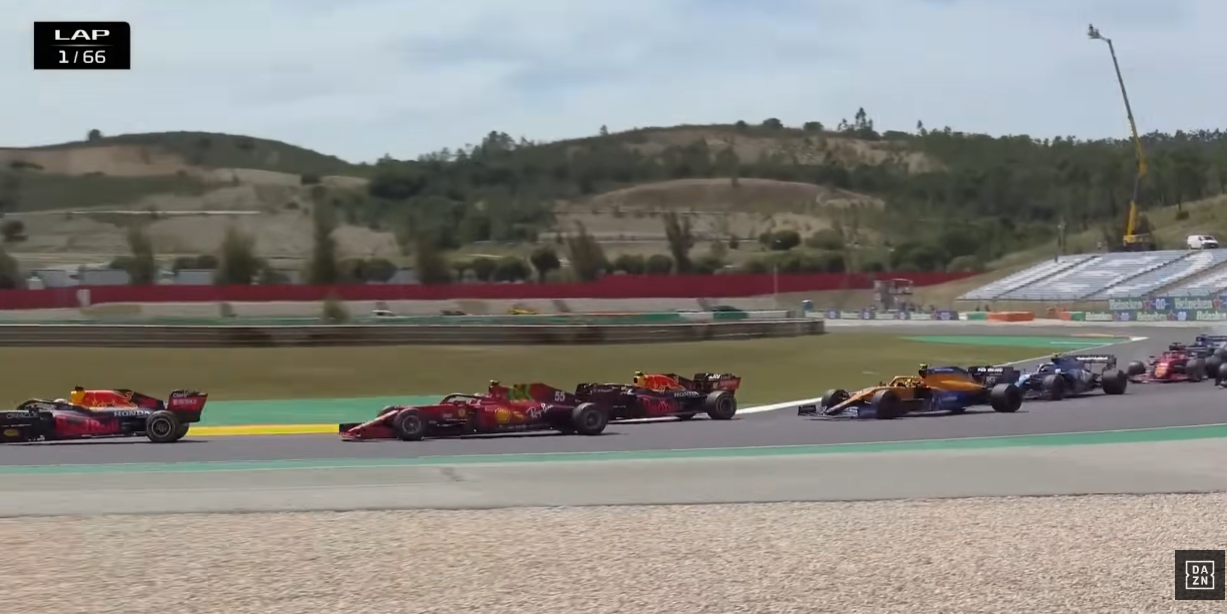
The Algarve International Circuit is emerging as one of the most credible emergency options to replace the Bahrain and Saudi Arabian Grands Prix in April 2026, with Imola positioned as the other leading candidate.
Fact‑check and status: what is actually confirmed?
The possibility of a 2026 Portuguese GP at Portimão originates from specialist outlets such as RacingNews365 and has since been echoed by international and Portuguese media, which report that Bahrain and Saudi Arabia could be dropped due to the deteriorating security situation in the Middle East. These reports indicate that Imola and Portimão are the primary “plan B” venues under consideration to prevent a month‑long gap in the early‑season calendar if the Gulf double‑header cannot proceed.
However, the FIA and Formula 1 have not yet issued any official calendar revision for 2026, and both Bahrain and Saudi Arabia remain on the published schedule at their original April dates. The management of the Algarve International Circuit has also confirmed that, as of early March 2026, it has not received formal notification that it will host a Grand Prix next year, underlining that any 2026 race remains provisional and dependent on how the crisis evolves.
By contrast, Portimão’s longer‑term future is already secured: the Portuguese government has agreed a deal for the return of the Portuguese Grand Prix in 2027, with an option or framework to extend into 2028, ensuring the circuit’s re‑entry to the official F1 rotation regardless of what happens in 2026. In practical terms, this means that 2026 is shaping up as an opportunistic early comeback driven by geopolitics, while 2027–2028 are structured, contractually backed events.
Why the Middle East conflict pushes F1 towards Europe
The core driver behind the potential reshuffle is the escalation of regional conflict involving Iran, the US and Israel, which has already produced direct attacks on targets in Bahrain and Saudi Arabia. According to reports cited in Portuguese media, both Gulf states have been struck by Iranian missiles or drones in retaliation for Western and Israeli operations, bringing the security environment around major events under intense scrutiny.
Mohammed Ben Sulayem, president of the FIA, has publicly stated that “safety and wellbeing will guide” decisions on these races, signalling that political considerations will not override risk assessments. In parallel, F1 commercial rights holders are reported to be reviewing contingency measures to avoid a scenario where sudden cancellations create a three‑to‑four‑week void in the calendar, with all the associated financial and sporting disruption.
From an operational standpoint, the Middle East conflict affects more than on‑the‑ground security, as regional airspace restrictions, rerouted flights and potential constraints on freight movements can compromise F1’s tightly‑timed logistics. This makes European circuits like Imola and Portimão attractive alternatives: they are within the Schengen area, accessible via established road and short‑haul air freight corridors from the sport’s European bases, and have recent experience operating under crisis conditions from the pandemic era.
In sum, if tensions and attacks continue or intensify, F1 faces a choice between retaining its Gulf rounds with elevated risk and logistical uncertainty, or pre‑emptively shifting to safer, more predictable European venues that can be activated at short notice. The combination of safety, political optics and calendar continuity explains why Portimão and Imola have emerged as the logical fallback pair.
The “rollercoaster” of Portimão: a technical overview of the Algarve International Circuit
The Algarve International Circuit (Autódromo Internacional do Algarve, AIA) is a 4.653 km Grade 1 facility with 16 corners, built into naturally undulating terrain that has earned it the nickname “Portimão’s roller‑coaster.” The lap profile combines steep elevation changes, blind crests and a mix of medium‑ and high‑speed corners, demanding precise car placement and an aggressive but controlled driving style.
Teams and drivers consistently highlight the verticality of the circuit as its defining feature: sections such as Turns 8, 11 and 13 have blind apexes created by cresting entries, while the Turn 10–11 complex rises by roughly 12 metres before plunging around 16 metres on exit, challenging drivers’ ability to judge braking and throttle application. Mercedes engineers have noted that the elevation changes impact drivers more than cars, increasing physical load and cognitive demand as they negotiate sequences where the car briefly feels almost weightless over the crests.
From a performance‑engineering perspective, Portimão is highly valued as a test venue because it stresses several key parameters simultaneously: aero efficiency in fast, loaded corners; traction over undulating exits; and suspension compliance over compressions and crests. The layout also exposes weaknesses in car balance, making it a useful reference track for correlation work between wind tunnel, CFD and on‑track data, which explains its popularity for private tests and, historically, for winter running.
Race‑wise, overtaking is possible but requires careful set‑up and racecraft. The long front straight, combined with a downhill run out of the final Galp right‑hander, creates a strong DRS zone into Turn 1, while secondary opportunities exist into Turn 5 after a sequence of fast changes of direction that can stretch tyres and brake temperatures. For spectators and television, the combination of sweeping elevation changes and exposed Algarve scenery makes Portimão visually distinctive while retaining the character of a modern, safety‑compliant facility.
Lessons from 2020 and 2021: Portimão’s track record under pressure
Portimão joined the F1 calendar in 2020 at very short notice as part of the COVID‑era reshuffle, replacing cancelled flyaway events and anchoring a cluster of European races that allowed the championship to reach a credible season length. Despite limited lead time, the circuit and local authorities delivered a full Grand Prix weekend under strict public‑health protocols, demonstrating an ability to mobilise infrastructure, marshals, medical support and transport logistics under exceptional constraints.
In 2020, the Portuguese Grand Prix saw Lewis Hamilton break Michael Schumacher’s record for all‑time Grand Prix victories, and the race weekend was widely praised for its organisation and the quality of the on‑track challenge. The success of that debut was decisive in Portimão being retained as part of the highly modified 2021 calendar, again as a replacement for other events — underlining that the circuit is trusted as a plug‑and‑play solution when F1 needs backup venues.
These two editions created a template that is highly relevant to the current 2026 scenario: the ability to integrate Portimão into an already complex schedule, align with F1’s broadcast and commercial requirements, and scale spectator operations flexibly depending on external constraints. That track record of delivering a world‑class event “on demand” is one of the key reasons Portimão sits at the top of F1’s European contingency list alongside Imola and Istanbul Park.
Can F1 realistically race in Portimão in April 2026?
Logistical “window” and calendar engineering
The current 2026 calendar places Bahrain and Saudi Arabia as a back‑to‑back double header in April, with teams expected to move freight directly between the two Gulf states before returning towards Europe. If those events are cancelled or relocated, the priority for F1 is to avoid a four‑week gap between other rounds, maintain regional clustering to control costs and emissions, and minimise disruption to existing contractual commitments.
Switching to Imola and Portimão achieves these objectives by creating a European double‑header that uses established road, sea and short‑haul air routes from F1’s UK and continental bases. Freight that would have been shipped to the Middle East can instead remain within Europe, significantly reducing customs complexity, transit time and exposure to geopolitical disruption tied to contested airspace over the Gulf and Iran.
From an operational perspective, Portimão is already accustomed to handling large‑scale events, with permanent paddock infrastructure, a modern pit complex and direct highway access to both Faro airport and the main north‑south road axes. Given that the circuit is prepared for its confirmed 2027 return, most of the capital investment is already in place, meaning that the incremental cost of bringing the race forward to 2026 is primarily organisational rather than structural.
Weather and track conditions in April
Climatically, April in the Algarve is well‑suited to F1: average daytime temperatures typically sit in the mid‑teens to low‑20s Celsius, with a low probability of extreme heat and only moderate rainfall risk, although wind gusts can be a factor on the exposed plateau where the circuit is built. These conditions fall within Pirelli’s comfortable operating window and are similar to those experienced during the spring 2021 race, suggesting minimal tyre‑selection or safety concerns related to ambient conditions.
For teams, an April race in Portimão offers relevant aerodynamic data for the European season because it combines cool track temperatures with high‑speed corners and elevation, a combination comparable to some early‑summer rounds but with reduced thermal stress. This makes the event not only logistically viable, but technically valuable as part of the development cycle for the 2026 ground‑effect cars and new power unit regulations.
Overall, if F1 and the FIA decide to withdraw from Bahrain and Saudi Arabia for 2026, there is a credible operational pathway to insert Portimão into the April slot as part of a European double header, with sufficient time in early 2026 to finalise contracts, ticketing and local arrangements if a decision is taken in the coming weeks.
Tourism strategy: why the Algarve in April works for F1
From a tourism‑strategy perspective, April is shoulder season in the Algarve: hotel occupancy is ramping up from winter lows but still below peak summer levels, leaving headroom to absorb the F1 “caravan” of teams, media and tens of thousands of travelling fans. The region offers a diversified accommodation base – from five‑star resorts and villa complexes to mid‑range hotels and serviced apartments – across Portimão, Alvor, Lagos and other nearby towns, enabling segmented packaging for different budget levels.
The climate adds to the value proposition. Mild spring temperatures make the area attractive for extended stays, golf and outdoor activities, encouraging visitors to turn an F1 weekend into a multi‑day or week‑long holiday rather than a short in‑and‑out trip. Crucially, the Algarve’s tourism infrastructure is already oriented towards international markets, with Faro Airport serving multiple European hubs and charter routes, simplifying travel planning for fans compared with some more remote circuits.
For the region, an April Grand Prix strategically stretches the tourism season, driving high‑value demand earlier in the year and reducing dependence on July‑August peaks. This aligns with long‑standing regional goals to smooth seasonality, boost aviation load factors in shoulder months and promote non‑beach experiences such as gastronomy, wine tourism and nature activities.
Real Dreams as an experience orchestrator
In this context, Real Dreams can position itself as a specialist integrator that turns the Portuguese Grand Prix from a simple ticket into a curated travel product. A premium F1 weekend in the Algarve can bundle several key components: private or shared transfers from Faro or Lisbon to Portimão, accommodation in Portimão or Alvor, guaranteed circuit transfers and optional hospitality upgrades at the track.
Beyond the race itself, Real Dreams can layer in themed experiences that leverage the Algarve’s strengths. These might include post‑race gastronomic tours featuring seafood and regional wines, sunset yacht trips departing from Portimão’s marina, or guided excursions along the coast to locations such as Alvor, Lagos and the Benagil caves. Structuring these as modular add‑ons allows both casual fans and corporate groups to tailor the intensity and cost of their trip.
For corporate clients and high‑net‑worth individuals, Real Dreams can develop fully hosted packages with concierge‑level service: VIP paddock or hospitality access (subject to F1 rights frameworks), private drivers, exclusive restaurant reservations and dedicated local hosts throughout the weekend. At the mid‑market level, the company can differentiate on operational reliability – clear logistics communication, optimised shuttle schedules and 24/7 support – which tends to be a pain point during major sporting events.
By aligning its product architecture with F1’s likely audience segments (core fans, corporate entertainment, lifestyle travellers), Real Dreams can position itself not merely as a reseller of tickets and rooms, but as the primary gateway to the “complete” Portuguese GP experience in the Algarve.
For fans arriving by air, Faro Airport is the most convenient gateway, with onward journeys to Portimão typically taking around one hour by car or transfer via the A22. Lisbon is a secondary option, with a longer drive but more intercontinental connectivity, making it attractive for visitors who plan a combined city‑plus‑Algarve itinerary and are comfortable with a three‑hour ground transfer.
If the FIA ultimately activates Portimão as a 2026 replacement, the Algarve stands ready to deliver not only a technically demanding, high‑stakes competition on one of F1’s most distinctive circuits, but also a scalable tourism platform that can turn the Portuguese Grand Prix into a complete travel experience for fans from across Europe and beyond.