Carcavelos
Lisbon’s nearest big surf beach, on the Cascais coast: a kilometre and a half of sand below an old wine coast and a sea fort.
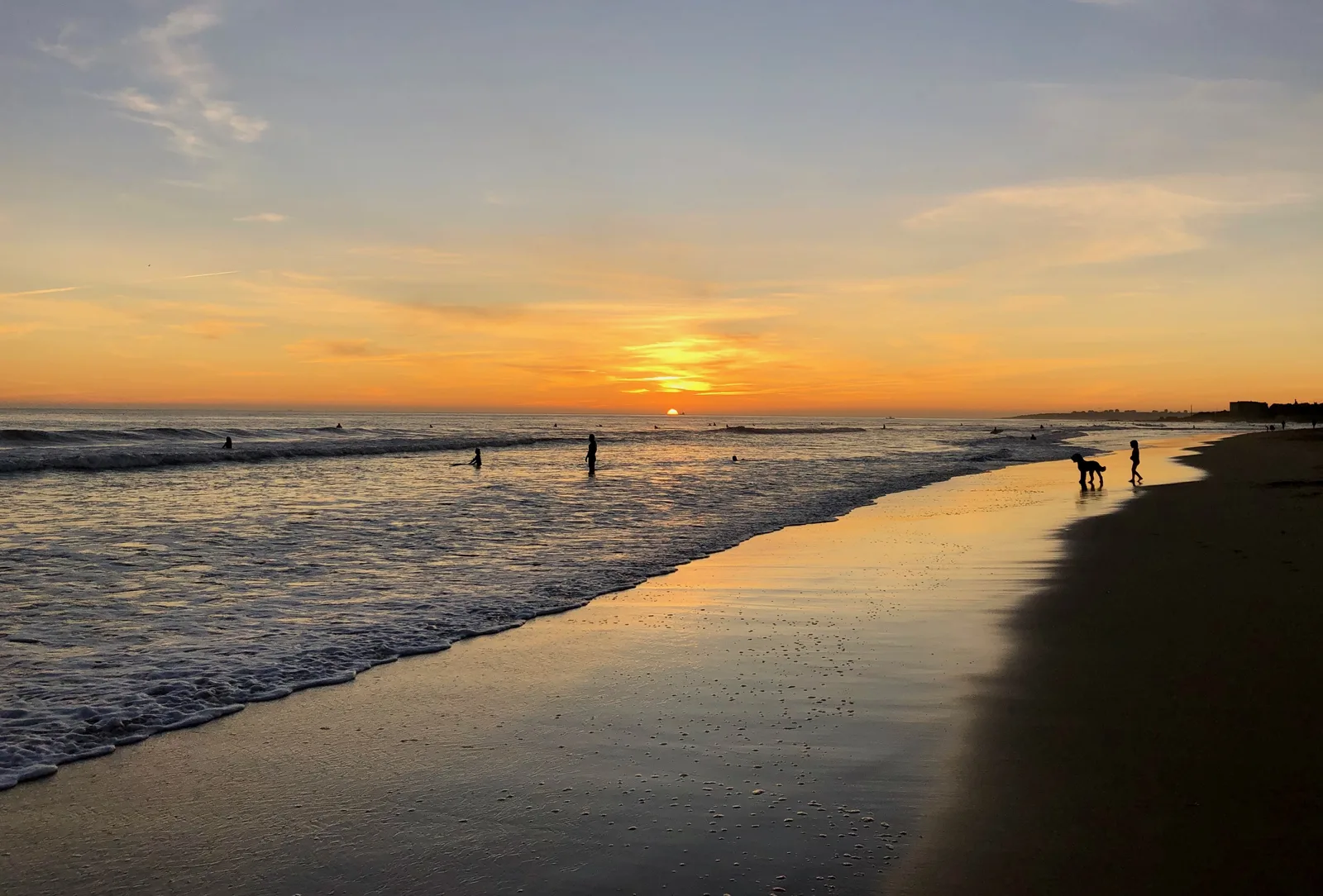
On the coast between Lisbon and Cascais, Carcavelos is the beach that Lisbon grows up on: a long, open stretch of sand half an hour from the capital by train, with waves steady enough to have made it the region’s surf school. Behind the beach lies a coast of old estates, and at its eastern end a sea fort that once guarded the Tagus.
From wine coast to surf coast
Carcavelos gave its name to one of Portugal’s historic wines, grown here before the city’s suburbs reached the shore; the vines have mostly gone, but the beach took over as the area’s reason to be. The long sand works for every level of surfer, and at the eastern end stands the Fort of São Julião da Barra, the great sea-facing fortress once called the shield of the realm, now a landmark of the shoreline. Down the coast, the resort town of Cascais and the waves of Ericeira complete a day’s coastline; the capital’s old cafés, like the A Brasileira, are a train ride back.
What to see
- The kilometre-and-a-half of open sand
- The surf schools and the waves of the open coast
- The Fort of São Julião da Barra at the river mouth
- The memory of the Carcavelos wine coast
- The train-line cafés and restaurants behind the beach
Practical information
Carcavelos stands on the coast of the Cascais municipality, about twelve kilometres west of Lisbon, with its own station on the Cascais railway line. The Atlantic is cold and the shore break real: swim where the lifeguards work, bring sun protection, and expect the sand to be full on summer weekends.
Image credit: Sunset on Praia de Carcavelos by Sonse — CC BY 2.0, via Wikimedia Commons.
Experiences
Explore related experiences


 English (UK)
 Português
 Polski
 Nederlands
 Italiano
 Français
 Español
 Deutsch
 한국어
 简体中文
 Svenska