Igreja de Santo António de Lisboa
By the cathedral of Lisbon, the church built over the birthplace of Saint Anthony — one of the city’s most visited sanctuaries.

A few steps down the hill from the Sé de Lisboa stands one of the most visited churches of the city: the Igreja de Santo António, built over the house where Fernando de Bulhões — Saint Anthony of Padua — was born in 1195. Lisbon claims the saint as its own, and every year his feast turns the surrounding streets into the biggest party of the June festivals, the Festas de Lisboa.
A church rebuilt and rebuilt
The sanctuary’s story is one of ruin and rebuilding. A church stood here for centuries; under King João V it was rebuilt in the lavish taste of the 1730s, and the great earthquake of 1755 brought it down again. The church that stands today was raised after 1767 to designs of Mateus Vicente de Oliveira, in the baroque-rococo manner of the rebuilt capital, and is classed as a National Monument.
The room below the altar
Below the church, a crypt marks the room of the saint’s birth, kept as a place of prayer where couples come to ask for marriage — a devotion the city takes seriously. Inside, the tiled walls, the small museum of the sanctuary and the constant flow of visitors and newlyweds give the church the air of a living shrine rather than a monument.
What to see
- The baroque-rococo church rebuilt after 1755
- The crypt of the saint’s birthplace
- The tiles and imagery of the interior
- The view up to the cathedral façade
- The June festival streets around the church
Practical information
The church stands at the Largo de Santo António da Sé, beside the cathedral on the castle hill of central Lisbon. The surrounding streets are steep and cobbled; the church is small and busy, so allow time to queue on feast days. Check official information for the crypt and museum openings.
Image credit: Igreja de Santo António de Lisboa by Hugo Ferreira — CC BY-SA 4.0, via Wikimedia Commons.
To Visit
More to explore

Museu Militar de Lisboa
In the old royal arsenal by the Tagus, Portugal’s military history from armour to artillery — in halls of gilded…
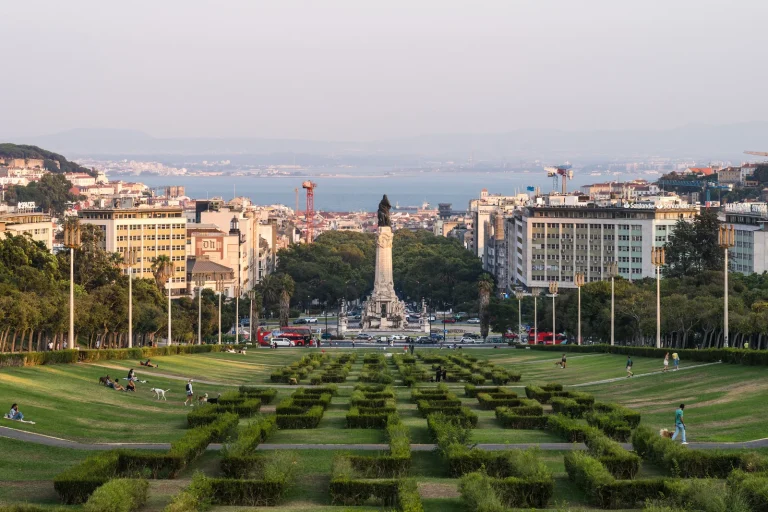
Parque Eduardo VII
Lisbon’s green wedge above the Pombal roundabout: patterned hedges, a cold greenhouse in a quarry and a viewpoint over the…
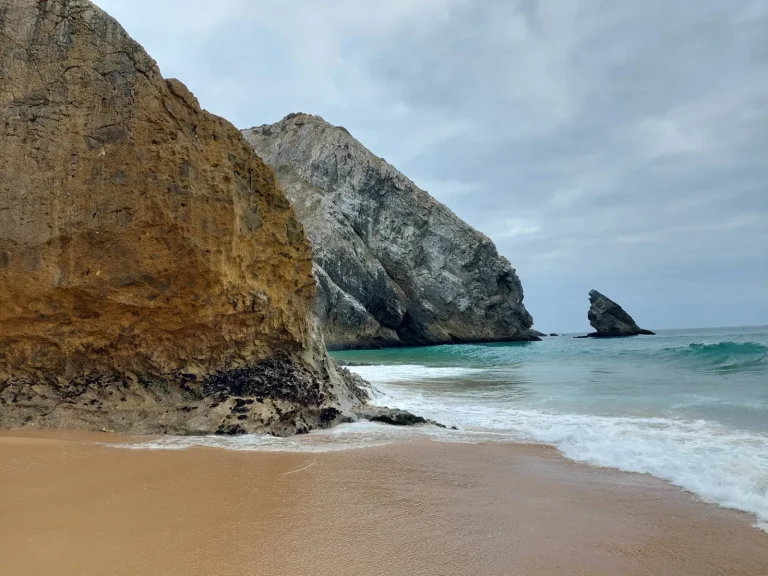
Praia da Adraga
Between the cliffs of the Sintra coast, a broad sand of dark gold and jagged rocks, close to the westernmost…
Experiences
Explore related experiences


360º Lisbon SkyWalk: Old Town Walking, Helicopter flight & Boat Trip

Day & Sunset Public Catamaran Tour with Drinks

 English (UK)
 Português
 Polski
 Nederlands
 Italiano
 Français
 Español
 Deutsch
 한국어
 简体中文
 Svenska