Corvo Island
With a surface area of just 17.1 km² and a population of under 400 people, Corvo stands out not for its size, but for its authenticity, geological uniqueness, and deep-rooted traditions.
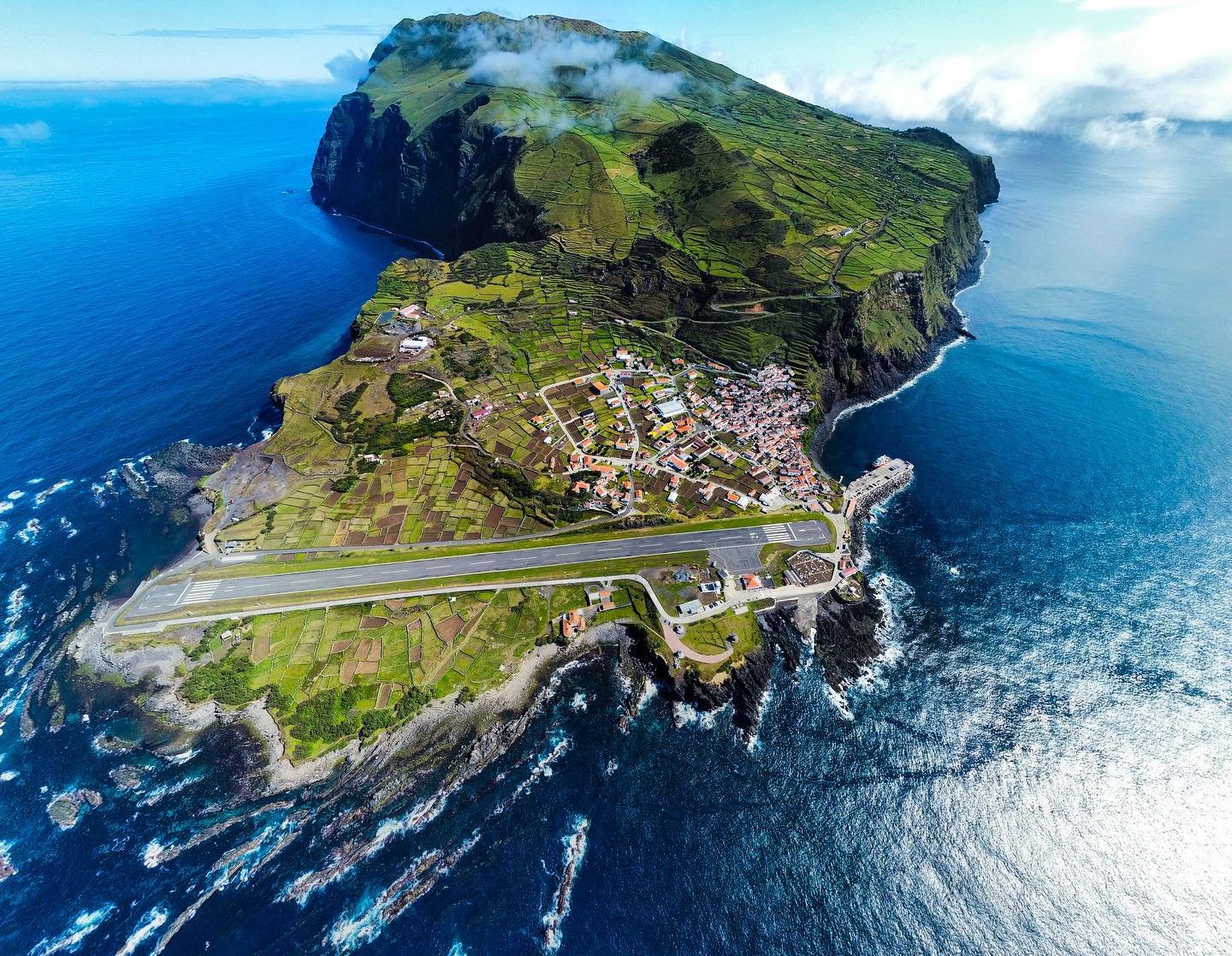
Corvo Island, known in Portuguese as Ilha do Corvo, is the smallest and northernmost island of the Azores archipelago, located in the North Atlantic Ocean. Isolated in the westernmost group of the Azores, alongside its larger neighbor Flores, Corvo is a UNESCO Biosphere Reserve, recognized for its pristine landscapes, rare biodiversity, and sustainable lifestyle.
The island has a volcanic origin, formed by a single stratovolcano that emerged from the ocean over 730,000 years ago. The remnants of this volcano today form the Caldeirão, a massive crater that dominates the island’s topography and is central to both its geography and tourism. Rugged cliffs, green pastures, and dry stone walls define the rest of the terrain, shaped by centuries of agricultural use and a close relationship with nature.
Historically, Corvo was discovered in the early 15th century by Portuguese navigators during the Age of Discoveries. Although difficult to settle due to its size and isolation, a small community eventually formed, relying on subsistence farming, livestock, fishing, and later on, emigration remittances. Corvo has maintained a unique socio-cultural identity, with strong community ties, traditional Azorean religious festivities, and a lifestyle centered around simplicity and resilience.
The only settlement on the island is Vila do Corvo, a compact village where basalt stone houses, narrow streets, and communal customs give visitors a strong sense of time standing still. Life here moves at a slower pace, offering a rare opportunity to disconnect and engage with both nature and people in a meaningful way.
Visiting Corvo is not about entertainment or luxury—it is about experiencing isolation, serenity, and authenticity. For travelers looking to escape noise and excess, and to truly understand how people can live in harmony with their environment, Corvo provides a rare and rewarding encounter.
Main Points of Interest
Despite its small size, Corvo offers several unique and meaningful places to explore. The island’s charm lies not in quantity, but in the authenticity and intimacy of each location. These are the essential stops for anyone visiting Corvo:
Caldeirão (The Volcanic Caldera)
The Caldeirão is the most iconic natural feature on the island. Located in the center of Corvo, this large volcanic crater is around 300 meters deep and 2 kilometers wide. Inside, two small lakes and several islets create a miniature map of the Azores, according to local tradition. The views from the rim are spectacular, especially on clear days. The trail down into the crater is physically demanding but offers a unique perspective on the island’s geological origins.
Tip: Bring waterproof boots—depending on the season, the interior can be muddy or partially flooded.
Vila do Corvo (The Only Village)
The island’s sole settlement is a tight-knit community of fewer than 400 residents. Walking through the village is a journey through time, with basalt houses, narrow cobbled alleys, and old stone walls. It’s also the place to interact with locals, who are known for their hospitality and directness. Key points of interest within the village include:
- Largo do Outeiro: A small central square often used for social gatherings and festivals.
- Traditional Windmill Ruins: Scattered remains of old mills that once supported the local economy.
Church of Nossa Senhora dos Milagres
Built in the late 18th century, this church is deeply important to the Corvo community. It houses the revered image of Our Lady of Miracles, the island’s patroness. The church plays a central role in local festivities, particularly on August 15th.
Casa do Tempo (Time House – Interpretation Centre)
This small but informative museum offers a historical and cultural overview of Corvo, including its settlement, economy, emigration patterns, and natural environment. Interactive panels and audiovisual materials provide context that deepens the visitor’s understanding of the island’s isolation and resilience.
Location: Vila do Corvo (near the Town Hall)
Entrance: Free or symbolic fee.
Corvo Wild Bird Interpretation Centre
Corvo is internationally recognized as a prime destination for birdwatching, especially during autumn migration. This centre introduces visitors to the island’s role in transatlantic bird migration and highlights rare species that pass through. It’s an essential stop for nature enthusiasts.
Species to Spot: American vagrants, shearwaters, storm-petrels, and Azores bullfinch (occasionally).
Port of Corvo (Porto da Casa)
More than just a harbor, the port is the island’s lifeline. It’s where the ferry from Flores arrives and where locals fish, swim, and gather. During summer, it’s a lively spot, and boat trips around the island or to Flores depart from here. There’s also a small café nearby, ideal for a coffee with an ocean view.
Miradouro do Caldeirão (Caldera Viewpoint)
Located at the crater’s highest point (around 650 meters above sea level), this is one of the best viewpoints on the island. On a clear day, visitors can see the full shape of the crater and the Atlantic Ocean beyond. Access is via a steep road from Vila do Corvo—taxi or rental is advised.
Rocha dos Bordões (Corvo’s Coastal Rock Formations)
Not to be confused with Flores’ version, Corvo also has impressive vertical basalt cliffs and lava formations along its western coast. These are best seen by boat, but some are also visible from land via short coastal paths. The contrast between black stone and the Atlantic is striking.
Caminho Velho (Old Trail from Caldeirão to the Village)
A scenic and historic walking path that descends from the rim of the Caldeirão to Vila do Corvo. Along the way, hikers pass grazing cows, stone fences, endemic flora, and panoramic sea views. It’s the most popular walking route on the island and takes around 1.5 to 2 hours.
Activities and Experiences
– Birdwatching: Corvo is internationally recognized for birdwatching, especially during the autumn migration. Rare species from North America can often be spotted here, attracting birdwatchers from all over the world.
– Hiking: Several trails crisscross the island, with the most popular route leading from the Caldeirão down to Vila do Corvo. Paths offer views over rugged cliffs, dry stone walls, and pastureland.
– Boat Trips: Trips around the island by boat are possible during summer months. These offer access to sea caves and cliffs that are otherwise unreachable by land.
Recommended Restaurants
Given the island’s size, dining options are limited but authentic:
Comodoro Restaurant – The main restaurant in Vila do Corvo, offering local dishes including fresh fish, grilled meats, and traditional Azorean soups.
Traça Restaurant & Café – A small café with basic meals, snacks, and friendly service.
Booking in advance is recommended during high season due to limited seating and supply logistics.
Festivities
Holy Spirit Festivities (May–June): These are celebrated similarly to other Azorean islands, with community meals, distribution of bread and wine, and religious ceremonies.
Nossa Senhora dos Milagres Festival (August 15th): This is the island’s main religious and community event, featuring processions, traditional music, and shared meals. It’s the best time to witness the local culture in its form.
Useful Tips
Transport: There is no public transport. Everything is within walking distance in Vila do Corvo, and locals often offer rides informally.
Accommodation: Options are very limited, mostly guesthouses and small family-run units. Early booking is essential.
Weather: The island can be windy and weather changes quickly. Bring waterproof clothing even in summer.
Connectivity: Internet and phone signals may be weak in some areas. Prepare accordingly.
Respect the community: Corvo has fewer than 400 residents. Visitors should be respectful and discreet, particularly during religious or social events.
Corvo Island is not for everyone. Its isolation, limited infrastructure, and quiet lifestyle contrast sharply with most tourist destinations. However, for those seeking raw nature, slow travel, and genuine human connection, Corvo is a rare gem.
Whether hiking the crater, watching rare birds, or simply enjoying the silence of the Atlantic, a visit to Corvo is a reminder of life at its most essential pace.