Estação Arqueológica de Tróia
The Roman industrial town of Tróia, with its fish-salting factories, across the Sado from Setúbal.
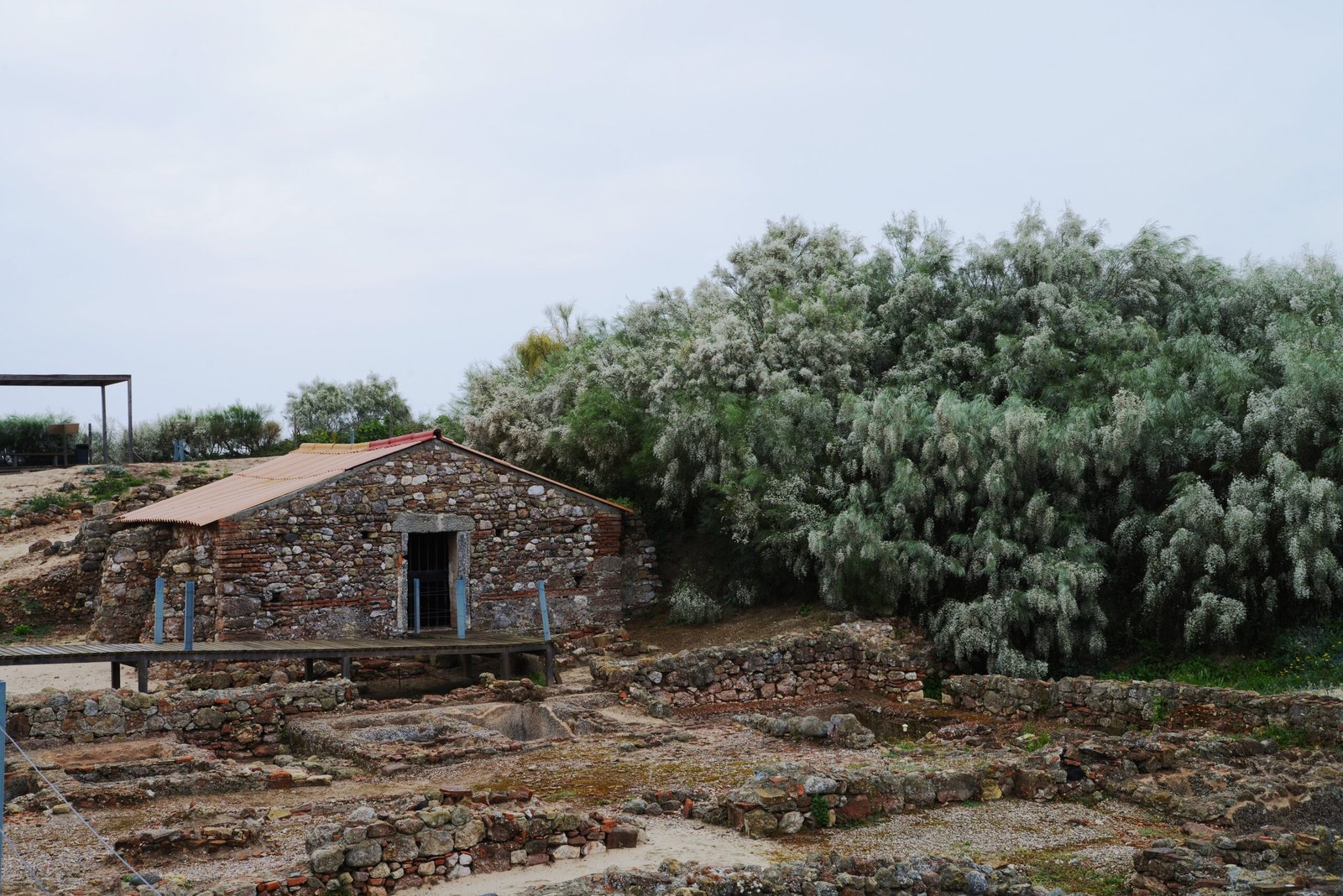
At the tip of the Tróia peninsula, in front of Setúbal, the ruins of a Roman town look over the estuary of the Sado. Here stood one of the great industrial centres of Roman Lusitania — fish-salting factories that produced the garum that travelled the empire — and the visit, reached by ferry across the river, is one of the most atmospheric archaeological walks of Portugal.
The ruins
The Roman settlement of Tróia lived from the sea: its factories salted fish and made the sauces that Rome prized, in tanks and workshops that visitors can still see among the dunes and the pines. Around them lie the remains of the houses, the baths and the necropolis of the town, which flourished between the first and the sixth centuries, in a landscape that changed little: the sand, the water and the light of the estuary.
What to see
- The fish-salting factories and their tanks, among the dunes.
- The houses, baths and streets of the Roman town.
- The views over the Sado estuary and Setúbal, opposite.
- The crossing by ferry from Setúbal, part of the visit.
Visiting
The ruins are reached by ferry from Setúbal, with the crossing over the estuary taking around half an hour, or by road along the peninsula. The site is explored on foot, between the sand and the ruins; the programme, tickets and conditions of the visit follow the official information of the entity that manages the station and of the municipality.
Nearby
The rice fields and dunes of Comporta and the river town of Alcácer do Sal continue the journey along the Sado.
Information: cm-grandola.pt.
Image credit: The Roman ruins of Tróia, by Alvesgaspar, CC BY-SA 4.0, via Wikimedia Commons.
Erlebnisse
Explore related experiences

Grande Prova Honrado Vineyards
 English (UK)
 Português
 Polski
 Nederlands
 Italiano
 Français
 Español
 Deutsch
 한국어
한국어 简体中文
简体中文 Svenska