Anta Grande do Zambujeiro
The largest dolmen in Iberia: seven six-metre pillars, a menhir with cup marks and five millennia of silence near Évora.
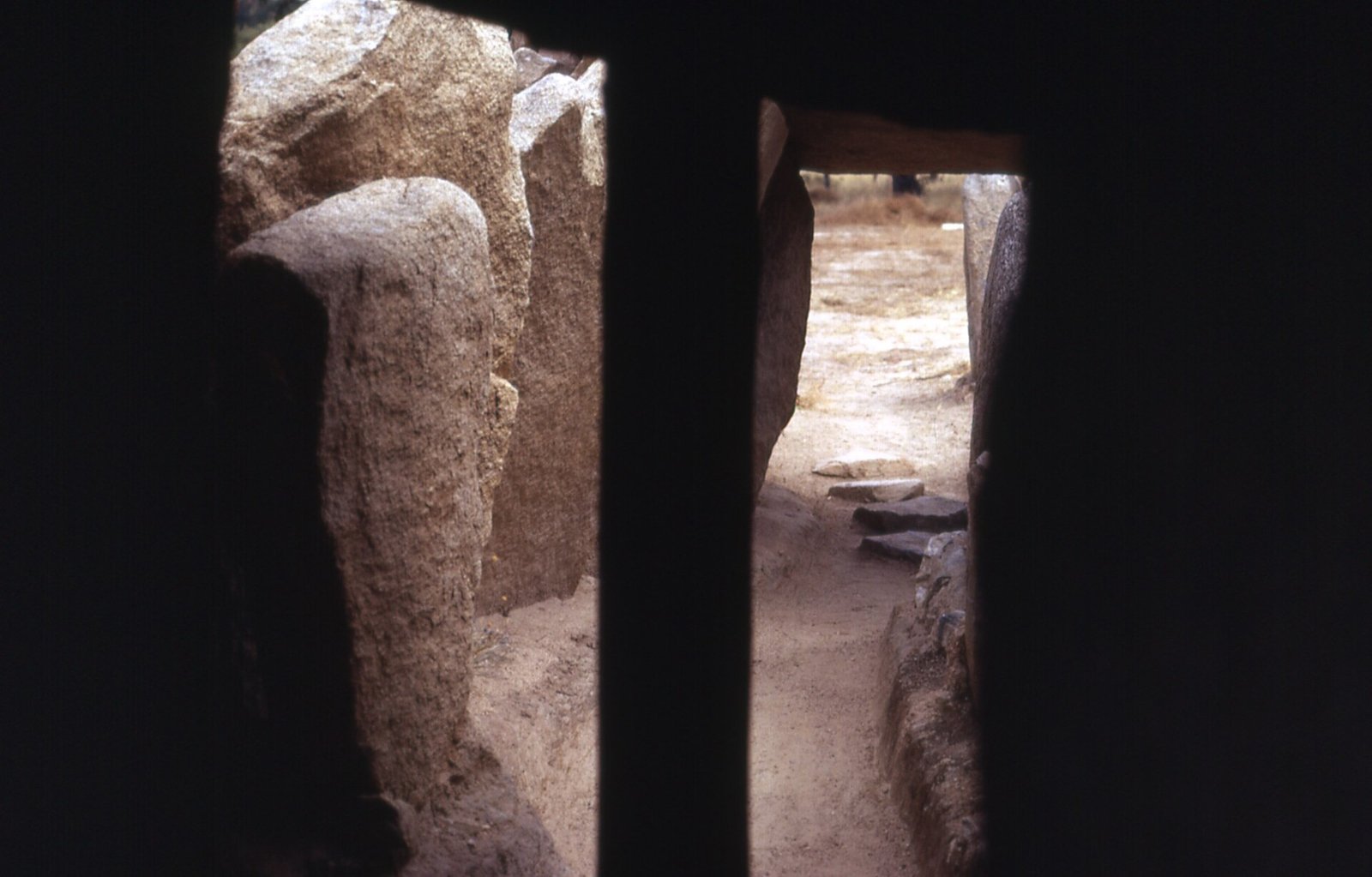
The Great Dolmen of Zambujeiro, near Évora, is the largest megalithic tomb in the Iberian Peninsula: seven granite pillars up to six metres high once held a chamber buried under a mound more than fifty metres across, with a corridor of sixteen stones stretching towards the rising sun. Built between six and five thousand years ago, it is older than the pyramids of Egypt.
The giant of the Évora megaliths
The dolmen belongs to the extraordinary megalithic landscape around Évora — the same culture that raised the Cromeleque dos Almendres, the largest stone circle in the peninsula, a few kilometres away. Excavated in the 1960s, Zambujeiro yielded necklaces, schist idols, copper tools and decorated vessels that are now in the museum of Évora; its huge menhir, covered in cup marks, lies fallen at the entrance, and the broken capstone of the chamber rests where it fell. A protective metal shell now shields the stones from the weather, and in 2020 the monument received a special protection zone that covers the surrounding fields — the dolmen standing alone in farmland, as it has for five millennia.
What to see
- The seven giant pillars of the chamber
- The corridor of sixteen standing stones
- The fallen menhir with its cup marks
- The mound in which the tomb was buried
- The megalithic landscape all around Évora
Practical information
The dolmen stands near Valverde, about 12 kilometres from Évora by the road to Montemor-o-Novo. It is a National Monument, free to visit and signposted from Valverde; the visit takes fifteen minutes. Combine it with the Almendres stone circle and the Anta Grande da Comenda da Igreja for a full megalithic afternoon.
Image credit: Anta Grande do Zambujeiro by John Atherton — CC BY-SA 2.0, via Wikimedia Commons.
Sehenswertes
More to explore
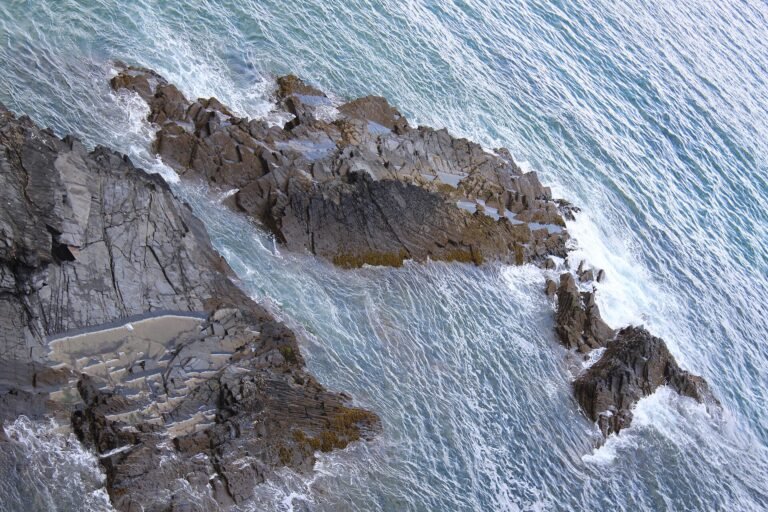
Zambujeira do Mar
The fishing village on the tall Alentejo cliffs, with stairs to the beach, the Fishermen’s Trail and storks nesting over…
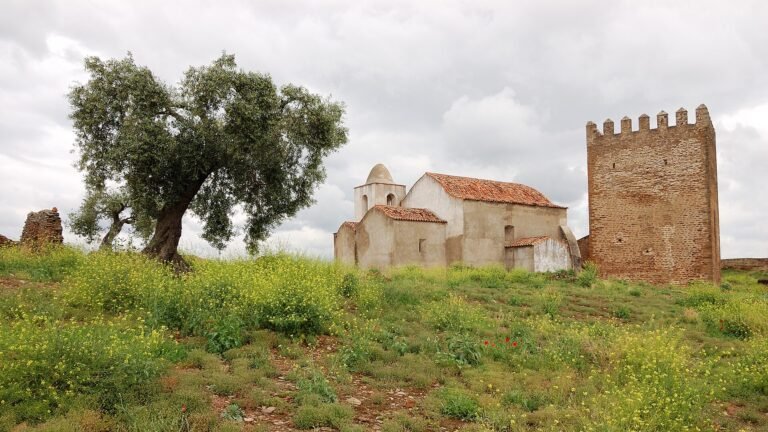
Castelo de Noudar
A castle with no town, founded in 1308 on the Spanish border — now a nature park among olive groves…

Alter do Chão
A castle rebuilt by King Pedro I and the world’s oldest stud farm, breeding the grey Alter Real horses since…
Erlebnisse
Explore related experiences

Grande Prova Honrado Vineyards

 English (UK)
 Português
 Polski
 Nederlands
 Italiano
 Français
 Español
 Deutsch