Ilha da Culatra
A barrier island with a working fishing village, reached by ferry from Faro or Olhão — the Algarve at its most authentic.

Culatra is the island that did not become a resort. A barrier island in the Ria Formosa, reached only by boat, it keeps a working fishing village of some seven hundred people, sandy lanes between white houses, boats moored at the doors and a beach on the ocean side that runs for kilometres. For a day out of the ordinary, this is the Algarve at its most authentic.
A village that lives from the sea
The settlement grew at the end of the 19th century from the old seasonal camps of the tuna fisheries, and fishing is still the island’s heartbeat — from the harbour lanes of Culatra proper to the hamlets of Farol and Hângares, with the Santa Maria lighthouse marking the western tip. Wooden walkways cross the protected dunes to the ocean beach, and to the east a long walk leads to the Barra Grande, where tidal pools shine on the sand at low water. The whole island belongs to the Ria Formosa natural park, and the passage from the quays of Faro oder Olhão is half the pleasure — a slow crossing among the channels and sandbanks of the lagoon.
What to see
- The fishing village streets and the little harbour
- The long ocean-side beach of Praia da Culatra
- The Farol de Santa Maria at the island’s western end
- The tidal pools and dunes at Barra Grande
- The birds of the Ria Formosa along the walkways
Practical information
Regular ferries run from Faro’s Porta Nova quay and from Olhão, most frequently in summer; no cars cross to the island. Restaurants specialise in the catch of the day — clams rice and fish stews above all. Take water and sun cover; the beach has lifeguards only in the bathing season.
Image credit: Ilha da Culatra by Joao Domingos — CC BY-SA 3.0, via Wikimedia Commons.
Sehenswertes
More to explore
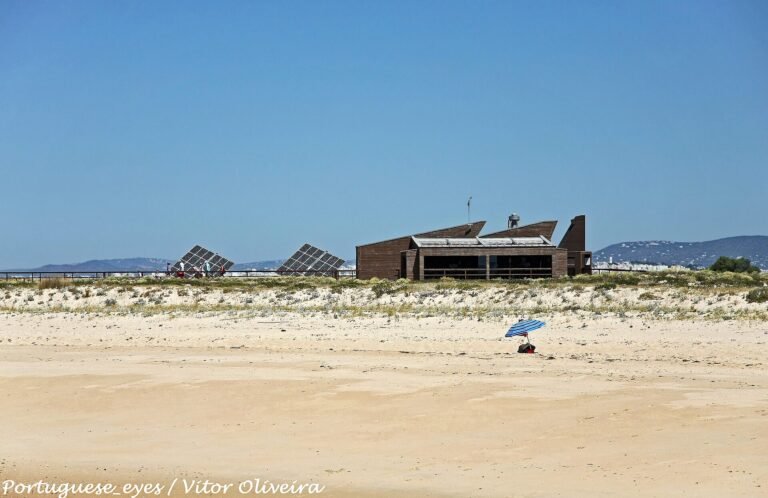
Ilha Deserta
The only uninhabited barrier island of the Ria Formosa: boardwalks, dunes, a solar restaurant and the island’s long white beach.
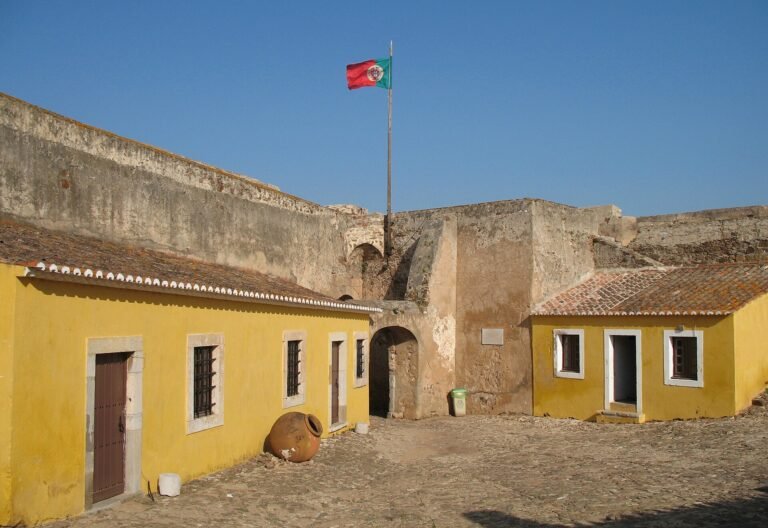
Castelo de Castro Marim
The first headquarters of the Order of Christ, above the Guadiana and Portugal’s oldest nature reserve, the Sapal.
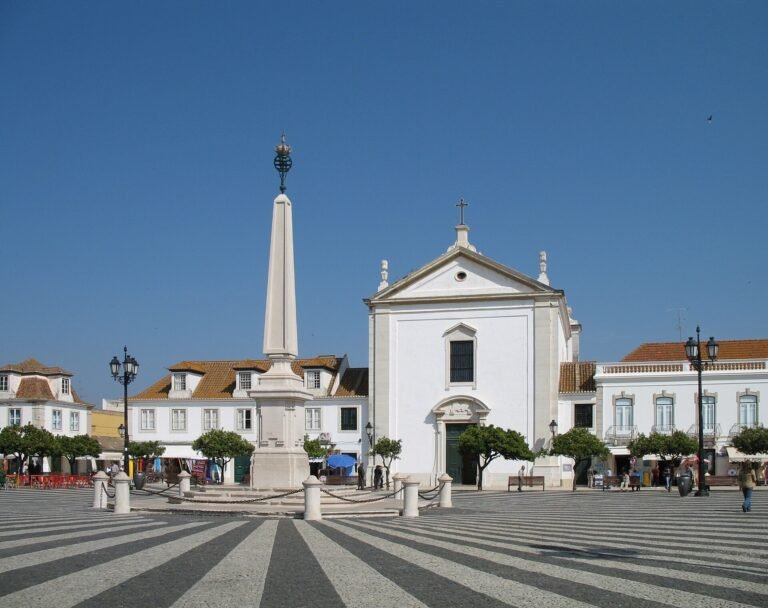
Vila Real de Santo António
The entire town planned by Pombal after 1755 and built in two years on the Guadiana frontier, facing Spanish Ayamonte.
Erlebnisse
Explore related experiences

 English (UK)
 Português
 Polski
 Nederlands
 Italiano
 Français
 Español
 Deutsch