Baleal
The former island joined to the mainland by a sand tombolo — calm on one side, Atlantic surf on the other, and the Berlengas on the horizon.

Baleal is an island that became a peninsula — and, in the process, one of the surfing capitals of Europe. A narrow bridge of sand ties it to the mainland near Peniche; on one side the ocean rolls in from the open Atlantic, on the other the water lies calm as a lake. The name comes from the whaling past: baleia, the whale, cut up on these rocks in the Middle Ages.
Sand, surf and the end of the tombolo
The tombolo that joined Baleal to the continent was one of the great geographical curiosities of the old maps; today you simply drive across. The village itself is small — a cluster of houses and surf schools around the beaches — while the (former) island keeps the small fort and the viewpoints where the waves break on all sides. Conditions here are famously forgiving: sheltered coves for beginners, powerful reefs and beach breaks for experts within a few hundred metres, which is why so many surf camps settled here. From the top of the island, the eye travels north along the coast to Cabo Carvoeiro and the islands of the Berlengas on the horizon.
What to see
- The two beaches on either side of the tombolo
- The surf schools and their year-round activity
- The island end and its wave-swept rocks
- The sunsets over the Berlengas
- The seafood restaurants of the village
Practical information
Baleal lies three kilometres north of Peniche, an hour and a half from Lisbon. The beach is watched in summer and free of charge; parking fills quickly at weekends. Bring a wetsuit even in August — the upwelling keeps the water bracing — and take the short walk to the island end for the classic view.
Image credit: Praia do Baleal by Alexkom000 — CC BY 4.0, via Wikimedia Commons.
Sehenswertes
More to explore
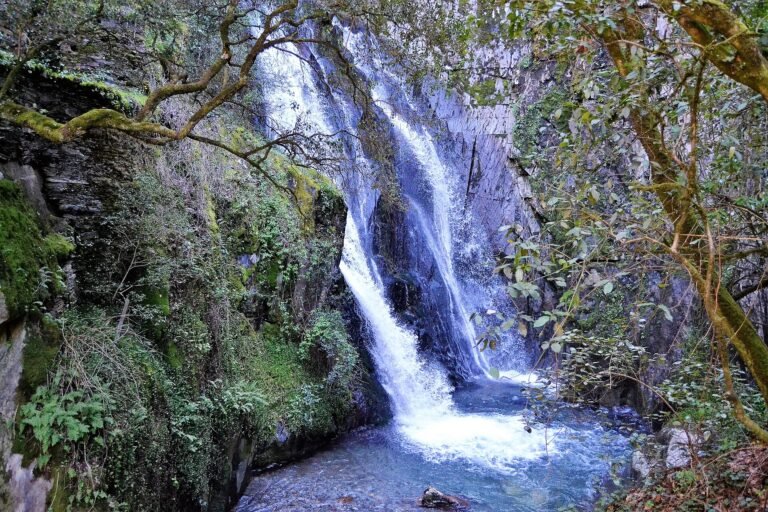
Fraga da Pena
A stair of waterfalls, the tallest 19 metres, hidden in one of Portugal’s oldest protected woodlands in the Serra do…

Grutas de Santo António
A cave discovered by chance in 1955, with one of the largest chambers of the Estremenho limestone and a waterfall…
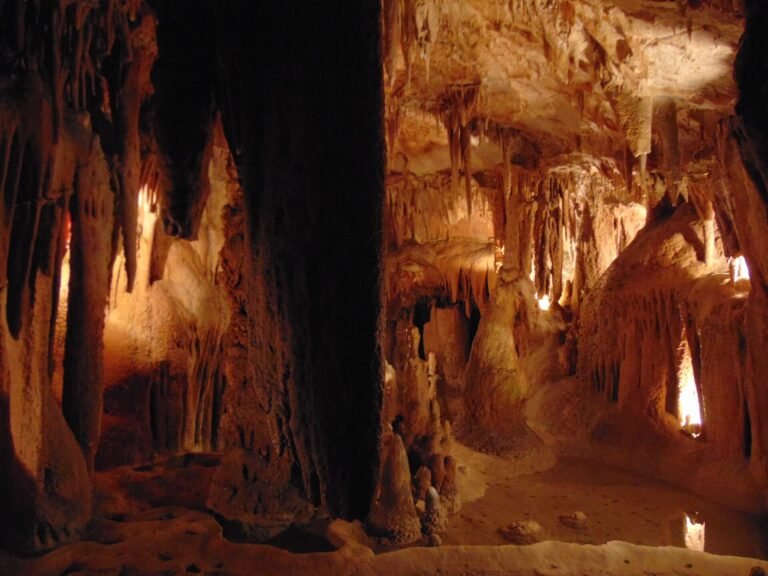
Grutas de Alvados
The cave the quarrymen found in 1964: great chambers and still lakes under the Serra dos Candeeiros, half an hour…
Erlebnisse
Explore related experiences
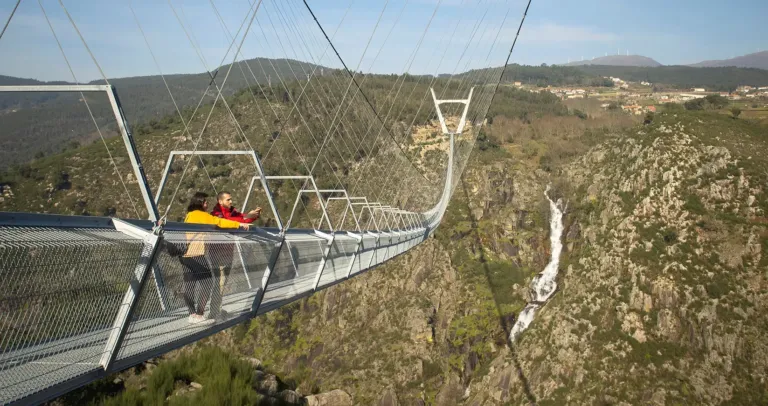
Geführter Ausflug zur Brücke 516 Arouca und zu den Passadiços do Paiva ab Porto
 English (UK)
 Português
 Polski
 Nederlands
 Italiano
 Français
 Español
 Deutsch