Aqueduto das Águas Livres
Lisbon’s 18th-century aqueduct carried water from Sintra’s hills above the Alcântara valley in 35 arches, and survived the 1755 earthquake.

The great arches that stride across the Alcântara valley are one of Lisbon’s grandest sights, and one of the boldest engineering feats of the 18th century: the Águas Livres Aqueduct, ordered by King João V to give the city clean water at last, entered service in 1748 carrying water from springs in the Sintra hills, and survived the earthquake of 1755 without a crack.
Water for the city
Built between 1731 and 1799, with the terminal reservoir of the Mãe d’Água das Amoreiras completed in 1834, the system ran for some 58 kilometres and supplied fountains all over the city, paid for by a special tax on wine, meat and oil. The most spectacular stretch crosses Alcântara in 35 arches, including the largest pointed stone arch in the world — 65 metres high and nearly 29 wide — designed by Manuel da Maia and Custódio Vieira. Parts of the aqueduct, its galleries and the monumental Amoreiras reservoir can still be visited through the Museu da Água. It belongs to the same golden-age Lisbon as the Museu Nacional de Arte Antiga and the baroque Nationalpantheon.
What to see
- The Alcântara arches, best seen from below or from the Campolide side
- The Mãe d’Água das Amoreiras reservoir and its exhibitions
- The interior gallery walk above the arches (guided visits)
- The Arco das Amoreiras, where the water entered the city
- The aqueduct’s fountains still standing around Lisbon
Practical information
The most scenographic view is from the Alcântara valley, near the Alcântara-Mar station; guided walks along the top of the aqueduct run on set dates and should be booked in advance through the water museum. The Amoreiras reservoir, at the Jardim das Amoreiras, is the easiest monument to visit on foot.
Image credit: Aqueduto das Águas Livres by Béria Lima de Rodríguez — CC BY-SA 3.0, via Wikimedia Commons.
Sehenswertes
More to explore
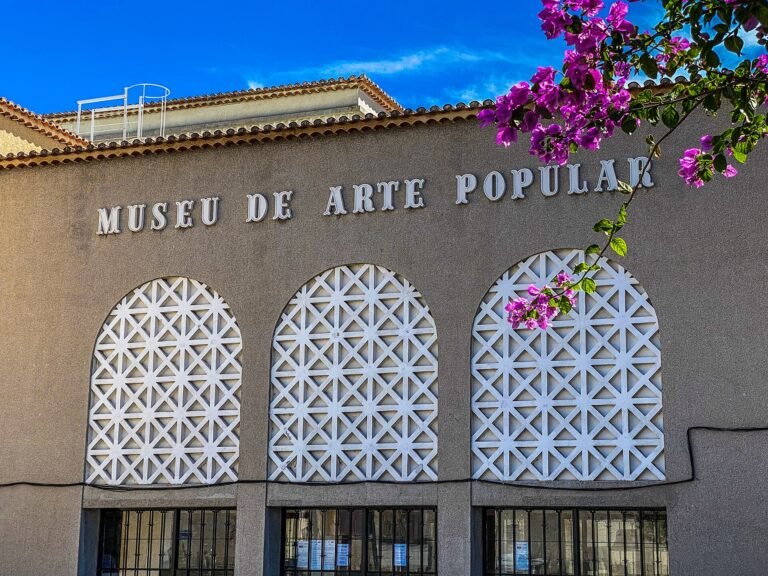
Museu de Arte Popular
Portugal’s national museum of folk art on the Belém waterfront — painted carts, ceramics and traditions in a survivor of…

Praia da Ursa
The wild beach below Cabo da Roca, reached by a steep cliff trail — the rock giants, the surf and,…
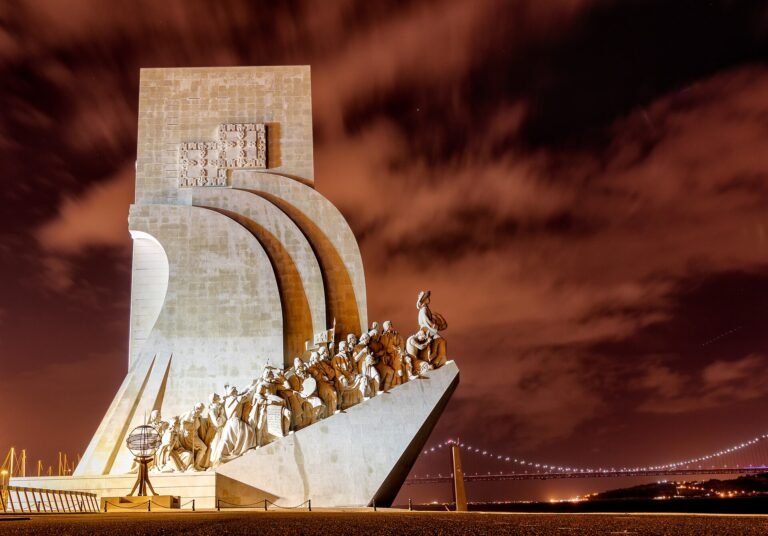
Padrão dos Descobrimentos
Belém’s caravel-shaped monument to the Age of Discovery, with a rooftop viewpoint over the river and the wind rose on…
Erlebnisse

 English (UK)
 Português
 Polski
 Nederlands
 Italiano
 Français
 Español
 Deutsch