Ilha do Pessegueiro
The islet of Pessegueiro off Porto Covo, with its 17th-century fort, Roman fish tanks and boat trips in summer.
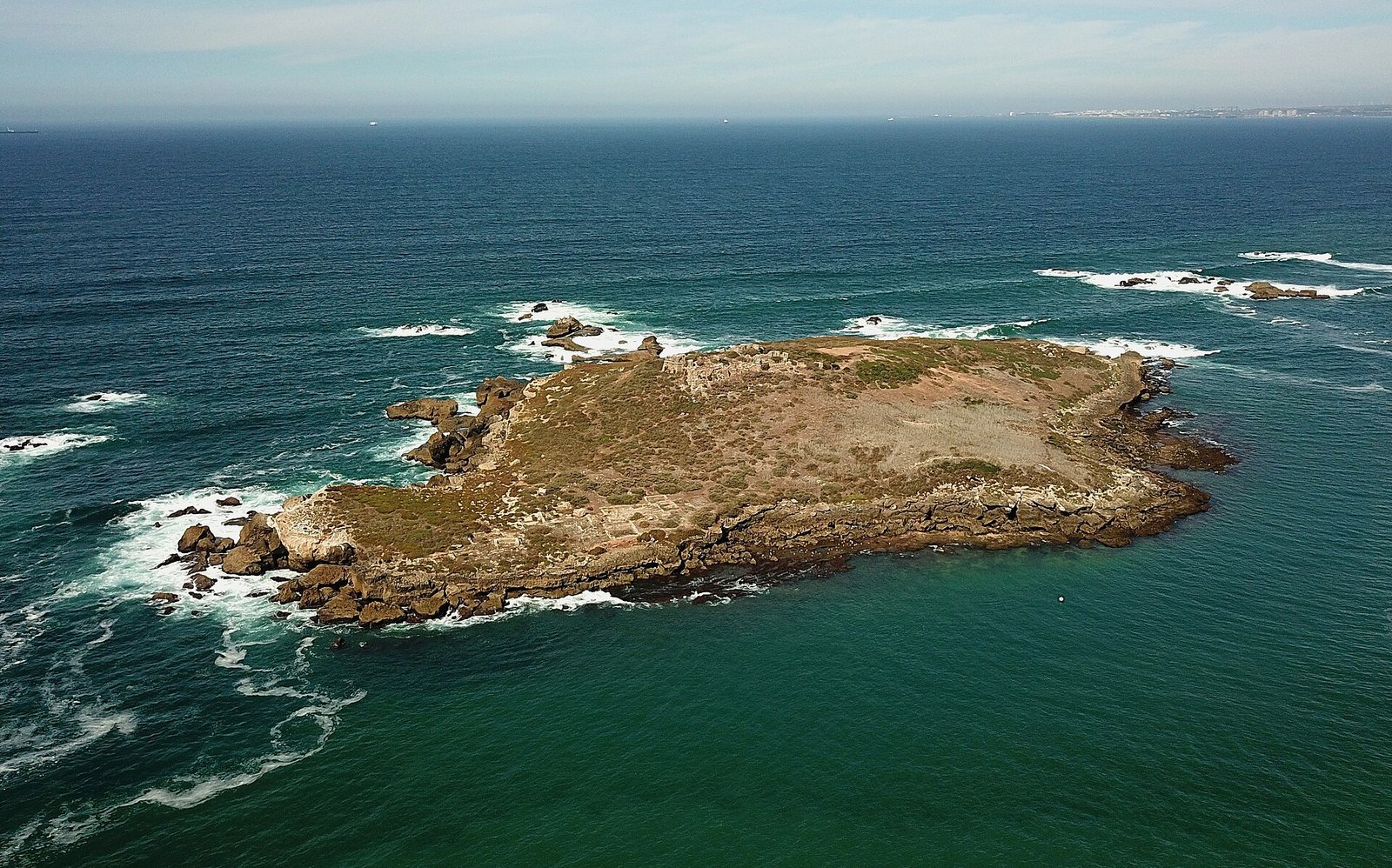
Off the Alentejo coast, a low island the shape of an upturned boat guards the entrance to a small bay. The Ilha do Pessegueiro — sung about by Rui Veloso and photographed by everyone who finds Porto Covo — is a place of fishermen’s boats, Roman ruins and seabirds, with a small fort standing watch.
Sailors’ island
The island’s name comes not from a peach tree but, most probably, from the Latin piscis: here stood a Roman fish-salting factory whose tanks were found along the shore and on the islet itself. Carthaginian and Roman ships sheltered in the channel, as fishing boats still do. In the 16th century, under Spanish rule, engineers began a fortified harbour that was never finished; what remains is the fort on the island and its twin on the mainland cliff, both listed, both wonderful viewpoints. The island sleeps under the protection of the South-West Alentejo and Vicentina Coast Natural Park, close to the beaches of Vila Nova de Milfontes and the town of Sines.
O que ver
- The island and its 17th-century fort, seen from the mainland beach
- The Praia do Banho and its view of the island
- Porto Covo’s whitewashed pombaline square
- Roman fish-salting tanks along the coast
- The seabird colonies of the islet and nearby cliffs
Practical information
Porto Covo, the village facing the island, lies 15 kilometres south of Sines on the coastal road. Boat trips to the island run in summer, from the fishing harbour; the channel is shallow and the crossing short. In winter the island is left to the birds.
Image credit: Ilha do Pessegueiro by Alvesgaspar — CC BY-SA 4.0, via Wikimedia Commons.
Experiências


 English (UK)
 Português
 Polski
 Nederlands
 Italiano
 Français
 Español
 Deutsch
 한국어
한국어 简体中文
简体中文 Svenska