Vila Real de Santo António
The entire town planned by Pombal after 1755 and built in two years on the Guadiana frontier, facing Spanish Ayamonte.

Vila Real de Santo António is unlike any other town in the Algarve: it was invented. After the 1755 earthquake, the Marquis of Pombal ordered a brand-new town to be raised on the Guadiana frontier, facing Spanish Ayamonte, and it was built in barely two years, with prefabricated stone elements and a grid of streets built to a single plan. The result is a rare Enlightenment town, square and bright, standing guard over the river mouth.
A town designed on a drawing board
The royal charter came at the end of 1773 and works were finished by 1776, on the site of the old fishing settlement of Santo António da Arenilha. Everything converges on the Praça Marquês de Pombal, a perfect square with an obelisk at its centre and the parish church facing it; the layout and the pombaline building system echo the rebuilt Baixa of Lisbon. Down by the river, the old quays still speak of the sardine and tuna trades that gave the town its living. The eastern Algarve rewards slow travelling: pair the town with the medieval hill and salt pans of nearby Cacela Velha, or with the old city of Tavira a little way west.
What to see
- Praça Marquês de Pombal and its obelisk
- The parish church of Nossa Senhora da Encarnação
- The riverside and the ferry crossing to Ayamonte
- The old fishing quarter and the harbour
- Monte Gordo’s long beach, minutes away
Practical information
Vila Real de Santo António sits at the far south-east corner of Portugal, on the Spanish border, about an hour by road from Faro. It is a natural base for the eastern Algarve and for crossing into Andalusia; the ferry to Ayamonte runs across the Guadiana in minutes.
Image credit: Vila Real de Santo António by Marc Ryckaert (MJJR) — CC BY 3.0, via Wikimedia Commons.
A visitar
More to explore
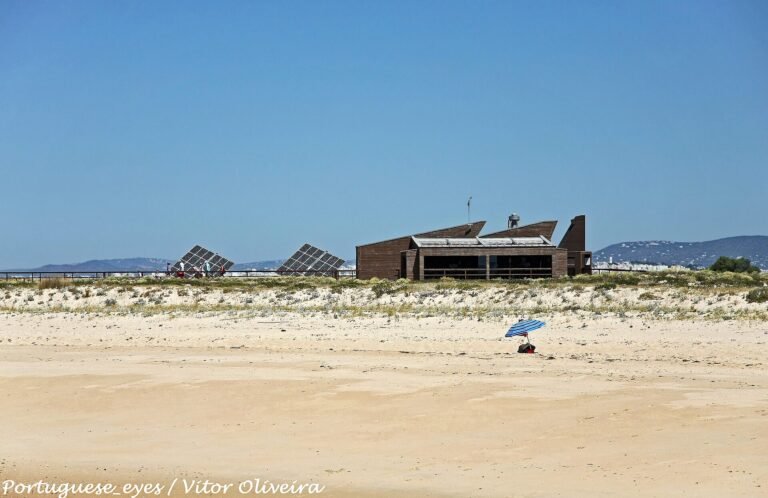
Ilha Deserta
The only uninhabited barrier island of the Ria Formosa: boardwalks, dunes, a solar restaurant and the island’s long white beach.
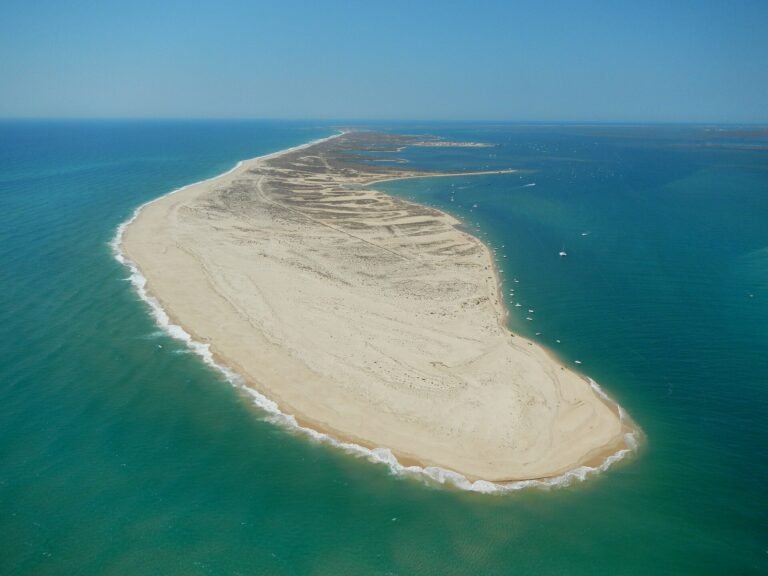
Ilha da Culatra
A barrier island with a working fishing village, reached by ferry from Faro or Olhão — the Algarve at its…
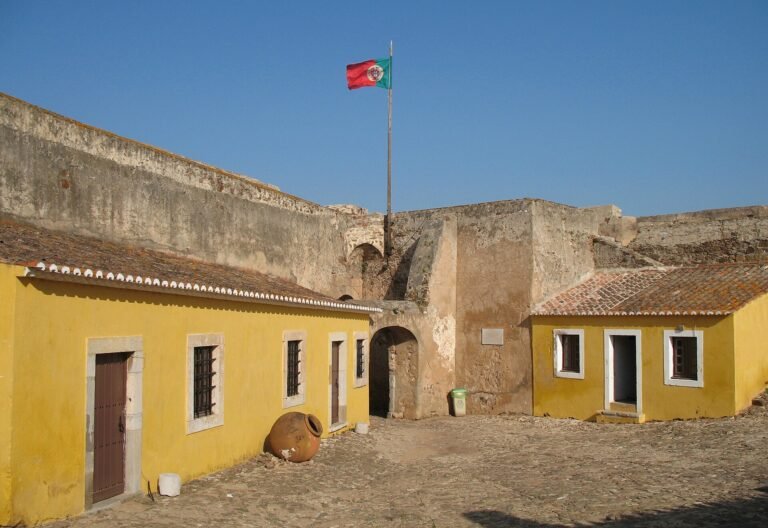
Castelo de Castro Marim
The first headquarters of the Order of Christ, above the Guadiana and Portugal’s oldest nature reserve, the Sapal.
Experiências
Explore related experiences

 English (UK)
 Português
 Polski
 Nederlands
 Italiano
 Français
 Español
 Deutsch