The Guide to the Douro in Spring: Viticulture and Logistics
Experiencing the Douro in spring means observing the region at its most informative moment: when physiology, climate and human decision‑making intersect in the vineyard.
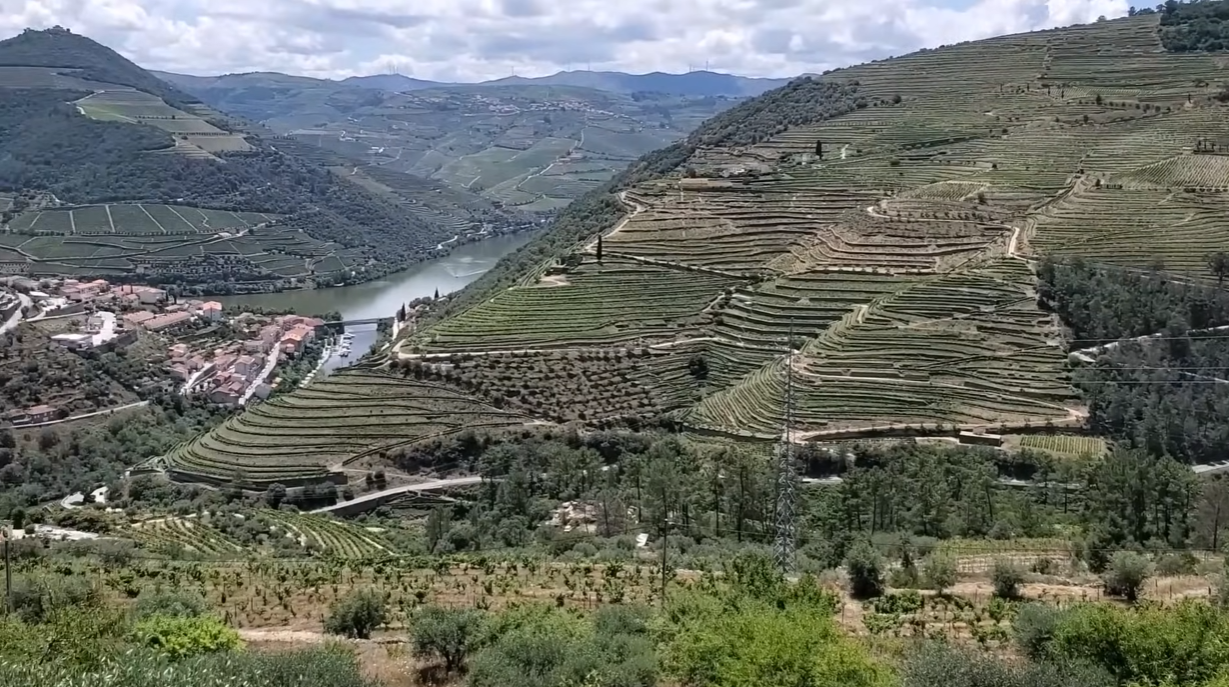
Budburst defines how the campaign begins, how water and nutrient management will be calibrated, and how future wine structure is pre‑determined months before harvest. For professionals, this is the season when the Douro stops being a scenic backdrop and becomes a live technical case study.
Spring phenology in the Douro: Budburst and the 10 ºC threshold
In the Douro, abrolhamento (budburst) typically occurs when mean daily temperatures stabilise above approximately 10 ºC, which is the operational threshold signalling the end of winter dormancy and the onset of active growth. At this point, xylem sap flow resumes, reserve carbohydrates mobilise from roots and trunk, and primary buds push to form the first green shoots that will carry that year’s inflorescences.
From a phenological perspective, this phase marks the transition from endodormancy to ecodormancy having been fully overcome, where accumulated chilling has satisfied rest requirements and heat accumulation becomes the dominant driver of development. For the Douro’s predominant varieties on schist slopes, the timing of this switch is crucial for frost risk, early disease pressure and alignment with the region’s often rapid spring warming.
Terroir, Sub‑Regions and Microclimate
Across Baixo Corgo, Cima Corgo and Douro Superior, the 10 ºC threshold is reached at different calendar dates, resulting in a staggered vegetative cycle.
Baixo Corgo: More Atlantic influence, earlier budburst, higher early‑season humidity and stronger mildew pressure.
Cima Corgo: Intermediate profile, ideal for comparative observation of altitudes and exposures within the same visit window.
Douro Superior: More continental, later budburst but faster heat accumulation once the threshold is crossed, sharpening decisions on water stress and canopy shading.
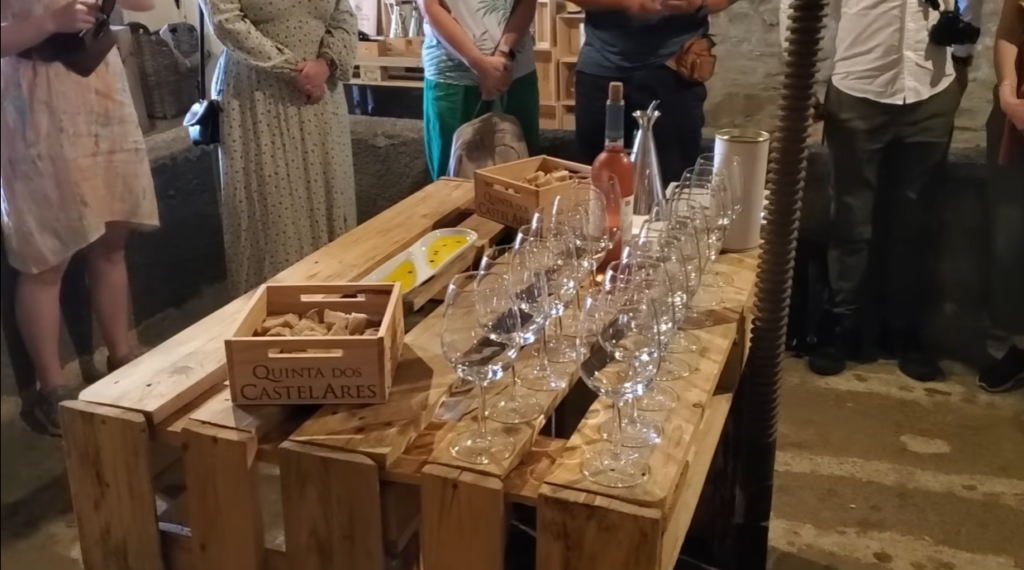
For a professional itinerary, this heterogeneity allows the same spring week to cover multiple phenological stages across sub‑regions, providing a structured comparative reading of terroir behaviour rather than a single static snapshot.
Why Spring outperforms Summer for technical visits
By summer, Douro daytime temperatures frequently exceed 40 ºC, inducing severe thermal stress for both vines and visitors. In these conditions, stomatal closure, leaf roll and accelerated berry dehydration dominate field observations, limiting the ability to read the fine detail of canopy architecture and early reproductive development.
In spring, moderate temperatures permit extended time on steep terraces without compromising safety or analytical focus. The vine canopy is still open, shoots are separable, and inflorescences are clearly visible, enabling precise assessment of:
- Bud fertility and shoot vigour,
- Early decisions on shoot thinning and positioning,
- Leaf‑to‑fruit ratio targets and incipient shading strategy,
- Disease management philosophy before bunch closure.
This contrasts with late summer visits, when dense foliage and advanced berry development reduce visibility and shift the focus primarily to ripeness monitoring.
Access to Winemakers and Operational Reality
Harvest is logistically intense in the Douro, with cellar and vineyard teams operating at full capacity and minimal availability for in‑depth technical briefings. Spring visits occur before this operational peak, allowing:
- Longer, structured discussions with viticulturists and oenologists.
- On‑site review of pruning strategy outcomes as expressed in budburst.
- Observation of soil management, cover crops and erosion control tactics on steep schist slopes.
For professionals, this season therefore offers both better physiological visibility and better access to decision‑makers, making it the rational choice for technical fieldwork.
Logistics of excellence in a steep, layered landscape
The Douro’s UNESCO‑listed slopes are defined by narrow, winding roads, sharp hairpins and terraces with significant gradients. These constraints make standard transport a safety and efficiency risk when moving between quintas and sub‑regions in a single day.
A professional‑grade programme requires:
- Specialised vehicles with mountain capability, high torque and advanced stability control suitable for steep inclines and uneven surfaces.
- Short wheelbase options for tighter access to historic estates, where turning radii and road width are limiting factors.
- Professional chauffeurs trained specifically in Douro roads, accustomed to frequent elevation changes and variable grip conditions.
Real Dreams integrates these parameters into route design, enabling precise timing between technical appointments and minimising fatigue from repeated ascents and descents.
H3 – Legal BAC limits and risk management
Portugal’s legal blood alcohol concentration limit for drivers is 0.5 g/l, with escalating penalties above that threshold, including fines and potential driving bans. For any itinerary explicitly centred on technical tastings, self‑driving is incompatible with professional risk management and corporate compliance.
Integrating private chauffeured services is therefore not an optional comfort but a structural safety requirement for serious wine trade and corporate groups. Real Dreams partners with premium fleets to provide vehicles that double as mobile workspaces, allowing participants to update tasting notes, review data and prepare for subsequent technical meetings while in transit.
Professional tasting culture in the Douro
A spring technical visit to the Douro should be grounded in oenological standards rather than purely hedonic consumption. That begins with the physical apparatus of tasting.
ISO 3591 defines the geometry and capacities of professional wine‑tasting glassware, designed to standardise sensory analysis by controlling headspace, rim diameter and bowl shape. In practice, professional programmes in the Douro should implement:
- ISO‑standard or varietal‑specific crystal stemware for all comparative tastings.
- Rigorous control of serving temperatures, such as: 10–12 ºC for structured whites; 16–18 ºC for full‑bodied reds.
- Neutral lighting and backgrounds to accurately assess colour and clarity.
Structure‑First analytical framework
To keep the focus on wine architecture and terroir expression, tastings should follow an analytical rather than purely descriptive sequence:
Visual phase: colour density, hue evolution and viscosity as indicators of extraction, age and alcohol.
Nose: separation of primary, secondary and tertiary aromas, with attention to reduction, oxidation and oak integration.
Palate:
- Acidity (line, intensity and integration).
- Tannin quality and polymerisation.
- Alcohol‑to‑fruit balance and mid‑palate weight.
- Texture, phenolic grain and finish length.
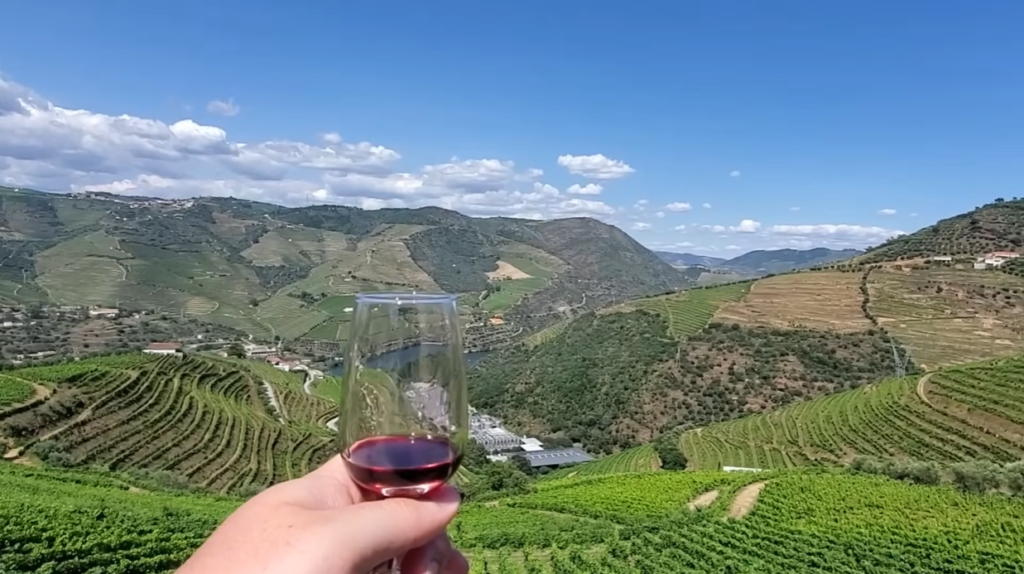
Technical tasting sheets should be used systematically to capture these dimensions and to support later comparison of vintages and sub‑regions. Vertical tastings of library releases, common at leading Douro quintas, allow professionals to observe how structure, fruit and oak evolve under the region’s specific ageing conditions.
Gastronomy as a Controlled Variable
In a professional context, gastronomic pairing serves to test the interaction between wine components and regional cuisine rather than to simply “elevate” the experience. Key considerations include:
- Matching acidity with fat levels to evaluate cut and refreshment.
- Using protein‑rich dishes to assess tannin softening.
- Testing salt and umami to probe perceived sweetness and bitterness.
- Structured spring lunches in the Douro can therefore function as practical laboratories for understanding how local wines behave in real service environments.
Designing a Spring Douro itinerary
A well‑constructed spring itinerary in the Douro aligns route planning with phenological stages and professional objectives. Real Dreams designs days that might include:
- Early‑morning vineyard walks focused on budburst, shoot length and inflorescence development in contrasting altitudes.
- Midday cellar sessions on fermentation infrastructure, ageing philosophy and back‑vintage library management.
- Afternoon comparative tastings across Baixo Corgo, Cima Corgo and Douro Superior to read how the same varieties manifest under different mesoclimates.
- Logistics are engineered backwards from these technical goals, ensuring that travel times, access roads and safety requirements support the analytical programme rather than constrain it.
Why work with a specialist operator
For professionals, the value of a curated Douro programme is measured in data quality, time efficiency and access to otherwise closed technical environments. Real Dreams operates as a specialised interface between visiting experts and estates that prioritise R&D, precision viticulture and long‑term terroir study.