Termas de Chaves
The Roman baths of Aquae Flaviae in Chaves, among the best preserved in Roman Hispania — water at 76 degrees.

In the town of Chaves, close to Portugal’s northern frontier, hot water has been rising from the earth and easing people’s aches since Roman times. The Roman baths of Aquae Flaviae, now a museum, are among the largest and best-preserved medicinal baths ever found in Roman Hispania.
Aquae Flaviae, the city of waters
The Romans built their city here because of the springs, and to guard the gold roads of the interior: their bridge over the Tâmega, still carrying traffic, is one of the treasures of Portugal. The bath complex beside it was monumental — halls, pools and vaulted chambers where soldiers recovered from wounds, and the sick came for the waters the locals call the healthiest in the world. Above the ruins, modern travellers do as the Romans did: the spa’s mineral water rises at 76 °C, rich in bicarbonates and trace elements. The museum reveals the ruins themselves, and the town’s old quarter keeps its flavour of barracks, bolas and border life. Northwards rise the mountains of the Peneda-Gerês National Park, and the region’s centre is the old city of Chaves itself.
What to see
- The Roman baths museum, with its pools and interpretation
- The Trajan bridge and its Roman columns
- The old town, castle keep and military museum
- The modern thermal spa at Largo Tito Flávio Vespasiano
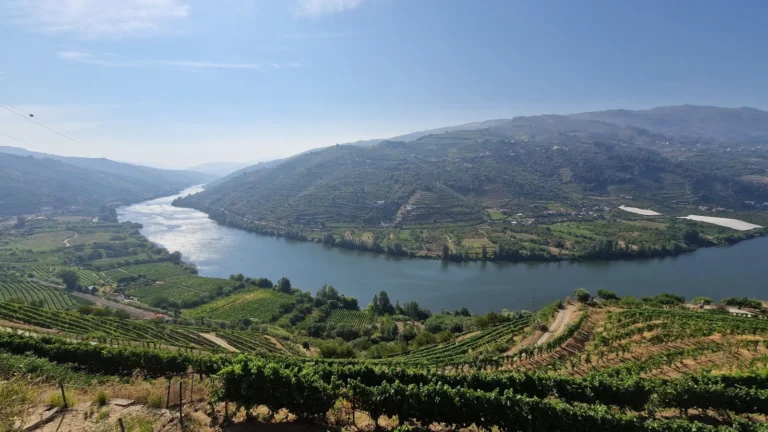
- The surrounding Trás-os-Montes landscapes, between mountains and vine country
Practical information
Chaves lies in Trás-os-Montes, near the Spanish border, about an hour and a half east of Porto. The Roman-baths museum opens daily with lunchtime closure; the modern spa is open all year, with therapeutic programmes and short wellness stays.
Image credit: Termas Romanas de Chaves by Alegna13 — CC BY-SA 3.0, via Wikimedia Commons.
Experiences
 English (UK)
 Português
 Polski
 Nederlands
 Italiano
 Français
 Español
 Deutsch
 한국어
한국어 简体中文
简体中文 Svenska