Ilha Deserta
The only uninhabited barrier island of the Ria Formosa: boardwalks, dunes, a solar restaurant and the island’s long white beach.
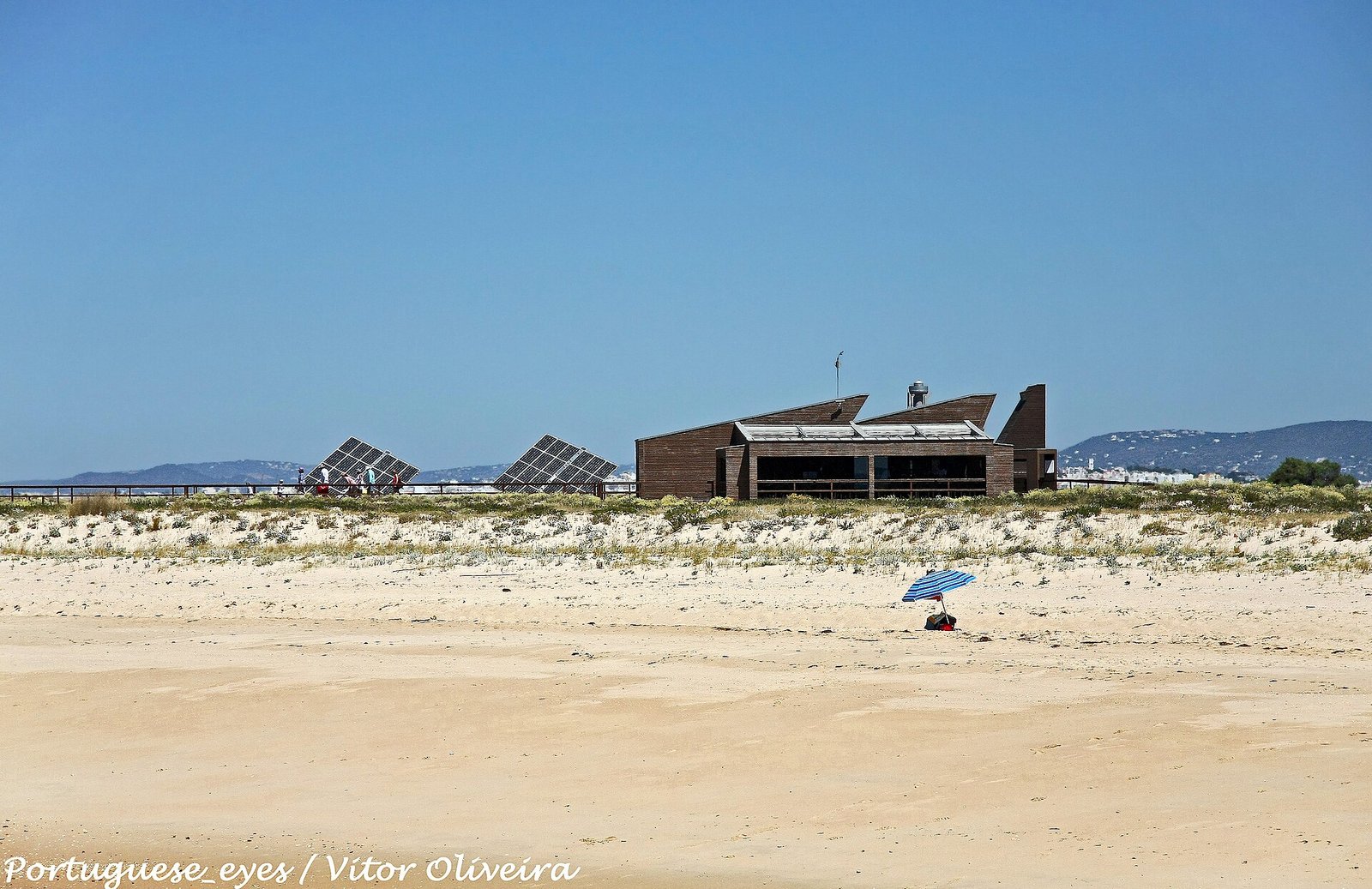
Deserta Island — the Deserted Island — is the only barrier island of the Ria Formosa with no village on it: seven kilometres of white sand, dunes crossed by wooden boardwalks, a solar-powered restaurant and nothing else but the birds. It is reached by ferry from Faro in twenty minutes, and the moment the boat turns into the lagoon channels you are already somewhere else.
The island that stayed empty
Officially the Ilha da Barreta, Deserta lies at the mouth of the Ria Formosa between Faro and the natural park channels, with the Cabo de Santa Maria — the southernmost point of mainland Portugal — at its western tip. Almost half of the island is covered by grey dunes, a priority habitat of the Natura 2000 network, and the boardwalk path across them is shared with rare plants, chameleons, seahorses in the seagrass meadows, and flocks of waders and terns. At the landing pier, the Estaminé restaurant runs on its own solar panels and desalinated water; beyond it there is only the beach, the shells, and the cold Atlantic.
What to see
- The long Atlantic beach and its dunes
- The boardwalk and the Ria Formosa birds
- The Estaminé, the island’s only building
- The lighthouse at Cabo de Santa Maria
- The lagoon channels seen from the ferry
Practical information
Ferries and shuttles leave from Faro’s Porta Nova pier throughout the year, most frequently in summer. There is no shade on the island — take water, sun protection and a hat. The beach is Blue Flag and lifeguarded in season; parts of the sand away from the landing are traditional nudist territory.
Image credit: Ilha Deserta by Vítor Oliveira — CC BY-SA 2.0, via Wikimedia Commons.
To Visit
More to explore
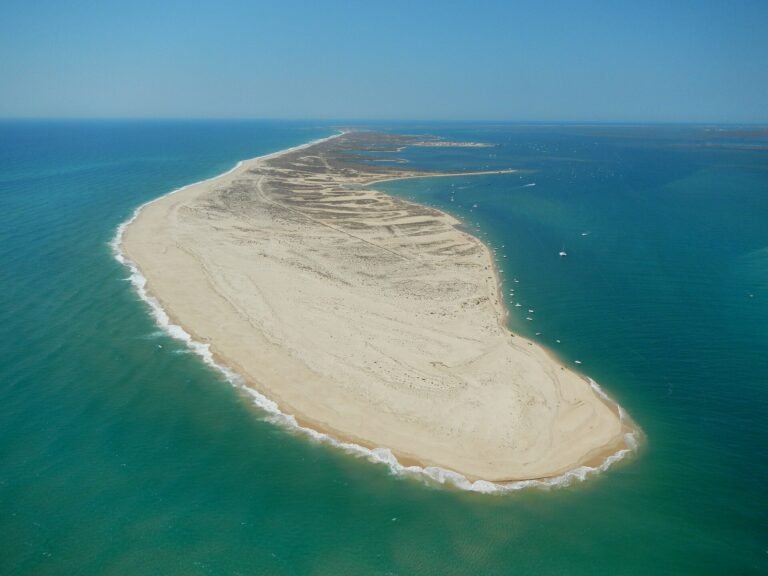
Ilha da Culatra
A barrier island with a working fishing village, reached by ferry from Faro or Olhão — the Algarve at its…
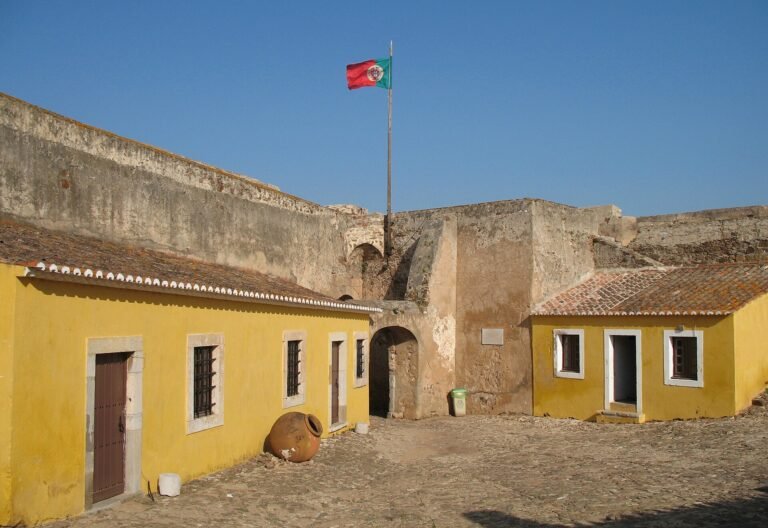
Castelo de Castro Marim
The first headquarters of the Order of Christ, above the Guadiana and Portugal’s oldest nature reserve, the Sapal.
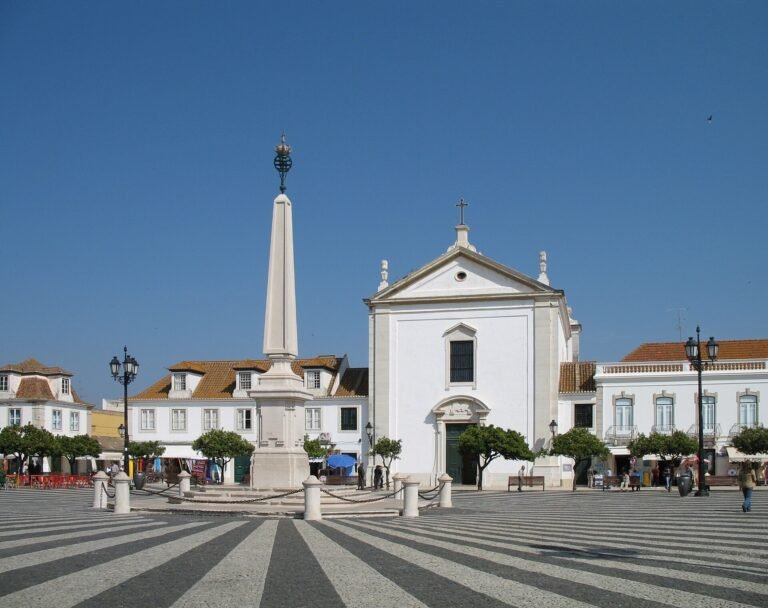
Vila Real de Santo António
The entire town planned by Pombal after 1755 and built in two years on the Guadiana frontier, facing Spanish Ayamonte.
Experiences
Explore related experiences

 English (UK)
 Português
 Polski
 Nederlands
 Italiano
 Français
 Español
 Deutsch