Alcobaça Monastery
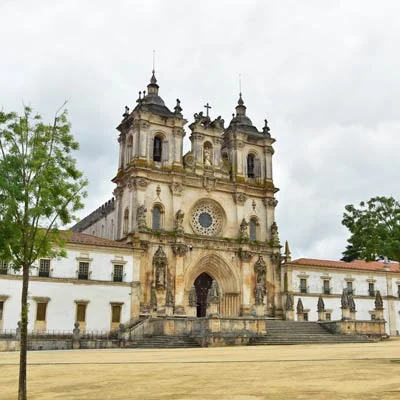
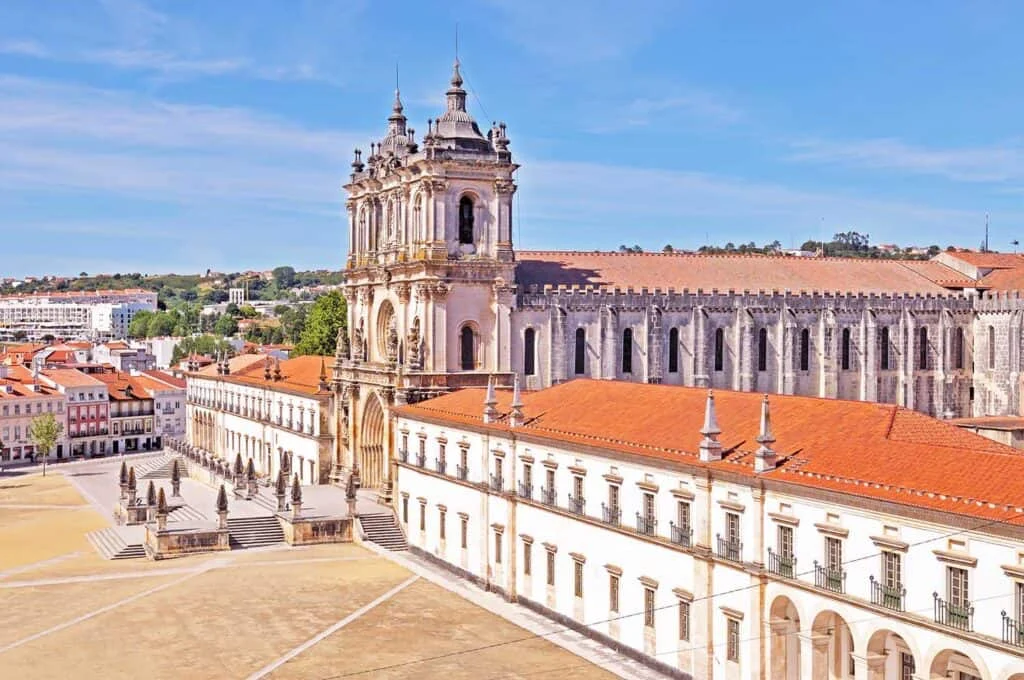
Recognised as a UNESCO World Heritage Site since 1989, it draws visitors from around the world with its historical significance and stunning Gothic architecture.
Located in the town of Alcobaça, in the Leiria district of Portugal, the Alcobaça Monastery is one of the most celebrated examples of Cistercian architecture in Europe. Founded in 1153 by King Afonso Henriques, the monastery reflects Portugal’s rich cultural and religious heritage.
Architectural Significance and Historical Highlights
The Alcobaça Monastery, formally known as the “Mosteiro de Santa Maria de Alcobaça“, is the first Gothic building in Portugal and boasts a style inspired by early French Gothic. Built in the 12th century by Cistercian monks, its architecture symbolises simplicity, devotion, and grandeur. The monastery is home to one of the largest church naves in Portugal, and its stark, unadorned style is emblematic of the Cistercian order’s principles of austerity.
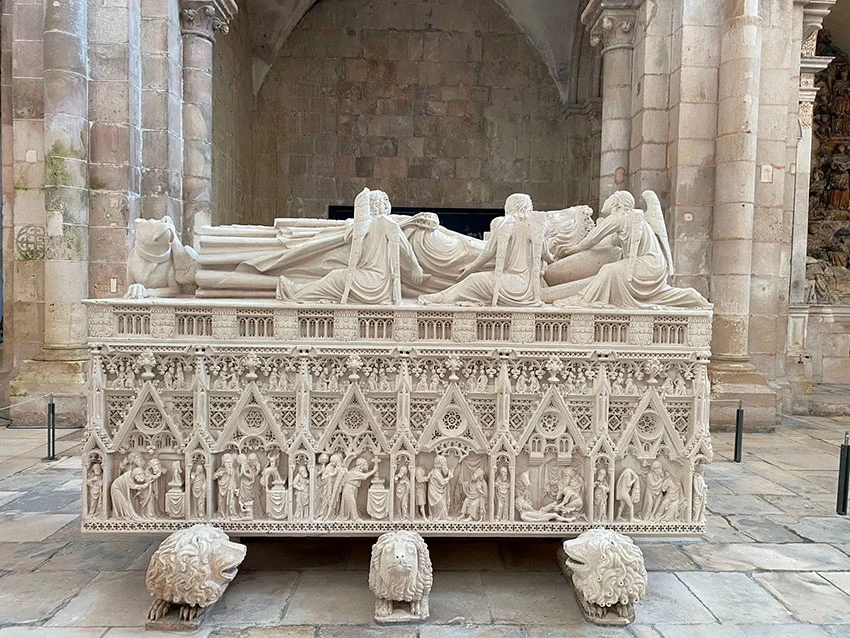
A must-see within the monastery is the impressive tombs of King Pedro I and his lover, Inês de Castro. Their tragic love story, immortalised in Portuguese history, is intricately detailed on these Gothic tombs, located opposite each other in the transept. This arrangement symbolises that they would reunite on Judgement Day, reinforcing the romantic legacy of their forbidden love.
Key Features and Must-See Areas
- The Church
The nave, an iconic feature of the Alcobaça Monastery, reaches a height of over 20 metres and spans a length of 100 metres. The grandeur of the simple yet towering columns and arches is awe-inspiring, emphasising the solemnity of the Cistercian approach.

- The Cloister of Silence (Cloister of D. Dinis)
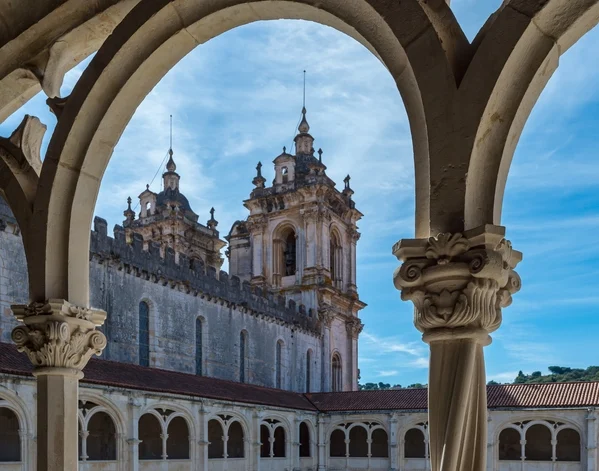
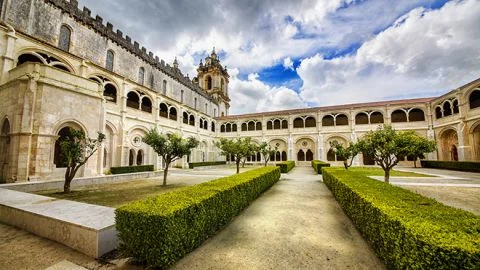
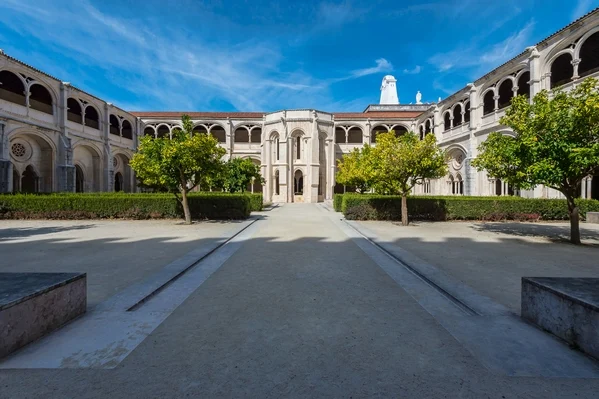
This cloister, a stunning mix of Gothic and Manueline styles, offers a peaceful escape and a glimpse into the daily routines of the monks who once lived here. Visitors can admire the symmetry and simplicity that frame the cloister, providing a perfect spot for reflection.
- The Chapter House and Refectory
Both areas offer insight into the monastic lifestyle. The Chapter House was used for meetings and reading, while the Refectory, with its imposing pulpit, was where monks dined in silence, accompanied only by readings.


- The Kitchen
A unique feature of the monastery, the kitchen includes a massive chimney and a water system fed directly from the Alcoa River. It reflects the self-sufficient nature of monastic life, as well as the monks’ innovative approach to architecture and resource management.


Tips for Visitors
- Opening Hours and Tickets
The Alcobaça Monastery is open year-round, with extended hours during the summer months (usually April to September). Admission fees vary, with discounts for students, families, and seniors. For the best experience, arrive early in the morning to explore the monastery in a quieter setting. - Guided Tours
A guided tour is highly recommended to gain a deeper understanding of the monastery’s history and architectural details. Several companies offer guided tours, or you can request an audio guide at the entrance for a self-paced experience. - Best Time to Visit
Visiting during the spring or autumn months allows you to enjoy the monastery and town in milder weather, avoiding the peak summer tourist crowds. The quieter atmosphere also enhances the reflective experience of exploring this historic site. - Accessibility
The monastery is accessible to visitors with reduced mobility, though some areas may be challenging due to the historic structure. Lifts and ramps have been installed where possible, and visitor assistance is available.

Practical Information
Alcobaça is approximately 120 km north of Lisbon and is best accessed by car or by coach from Lisbon’s Sete Rios station. Limited train services are also available.
Alcobaça has several hotels and guesthouses within walking distance of the monastery. Dining options range from traditional Portuguese cuisine to modern cafes. Visitors looking to stay overnight can enjoy the town’s relaxed pace and explore further.
To Visit
More to explore

Museu Nacional de Machado de Castro
Coimbra’s National Museum of Machado de Castro occupies the former bishops’ palace, built on the site of Aeminium’s Roman forum…
Baía de São Martinho do Porto
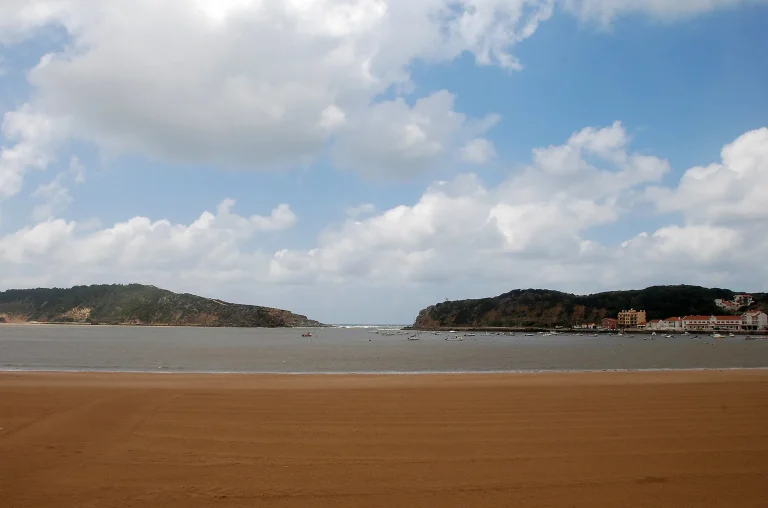
The bay of São Martinho do Porto is shaped like a shell, with a narrow entrance opening to the Atlantic.…
Barrinha de Mira
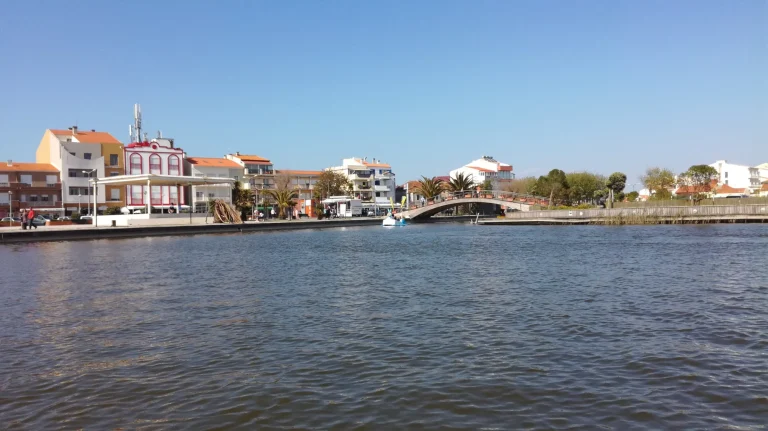
Barrinha de Mira is a small freshwater lagoon on the inland side of Praia de Mira, fed by freshwater streams.…
Experiences
Explore related experiences

Alcobaça Monastery: Private Tour
All Ages • 2 hours • Explore an amazing UNESCO Heritage site
Alcobaça Monastery: Private Tour & Ceramics Workshop
All Ages • 4 hours
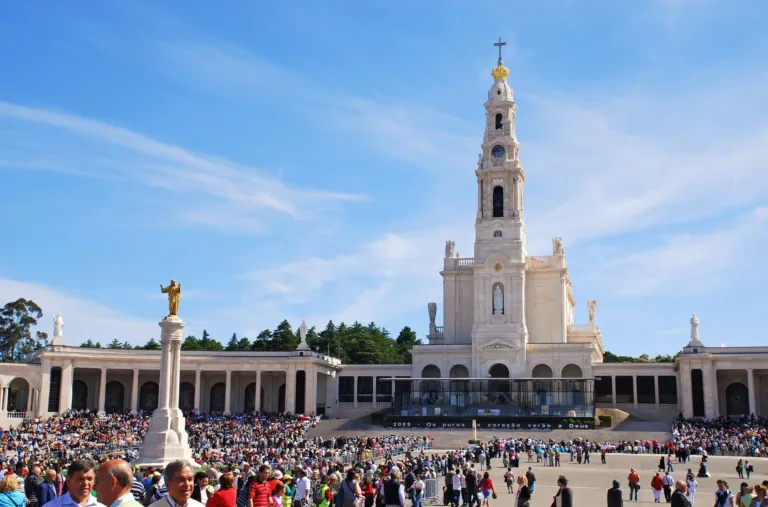
Tour FD Fátima, Batalha, Alcobaça & Óbidos
10 Hours

Alcobaça and Batalha Monasteries: Private Tour
All Ages • 4 hours • Discover and Explore the amazing UNESCO medieval monasteries
 English (UK)
 Português
 Polski
 Nederlands
 Italiano
 Français
 Español
 Deutsch
 한국어
 简体中文
 Svenska
 Português do Brasil
 Dansk
 Norsk