Santuário do Cabo Espichel
The pilgrimage sanctuary of Cabo Espichel, alone on its cliff above the Atlantic, and the dinosaur tracks beneath it.
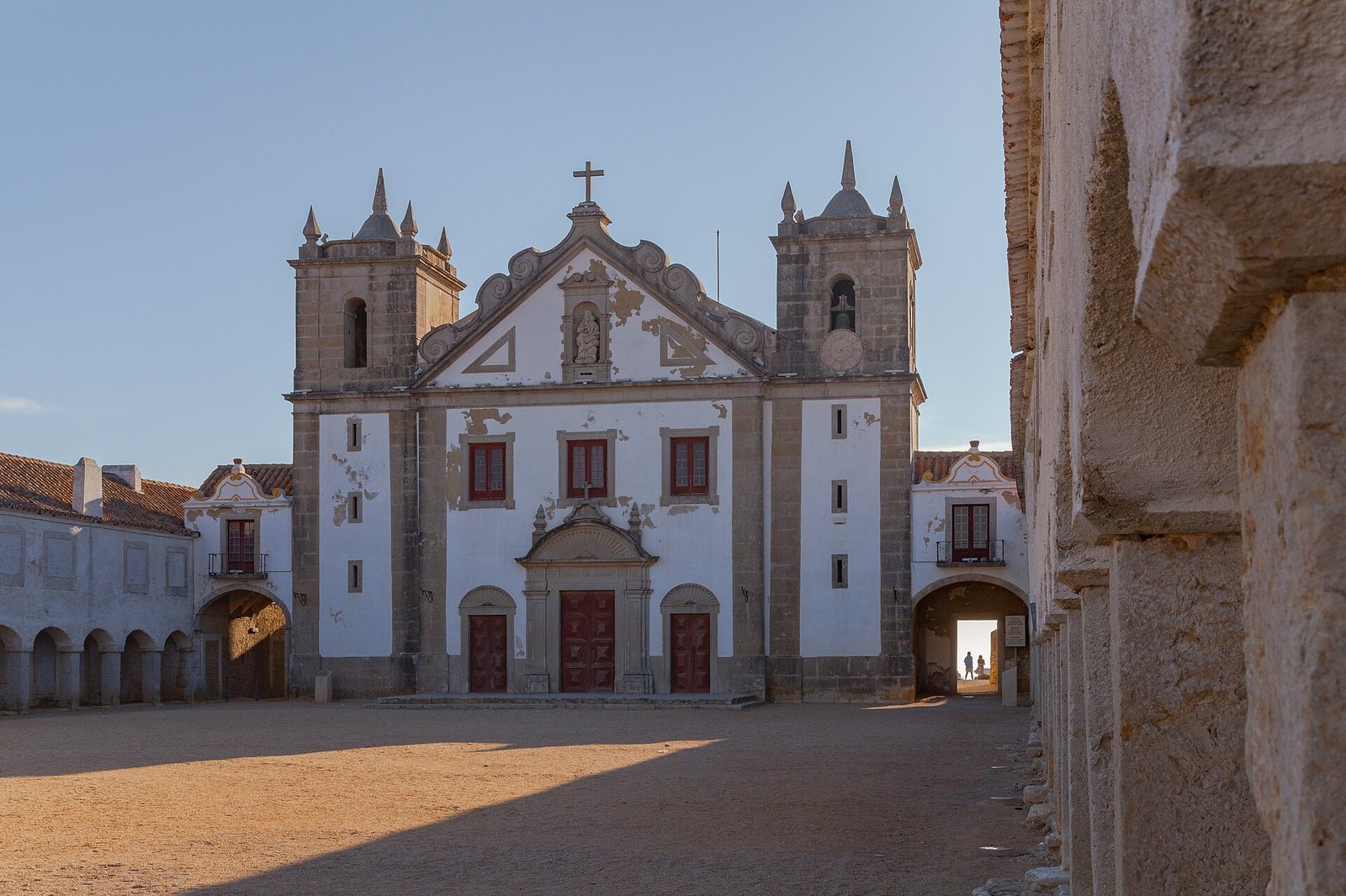
At the western edge of the Setúbal peninsula, where the land ends in cliffs above the Atlantic, stands one of Portugal’s strangest and most moving monuments: the Sanctuary of Cabo Espichel, built at a place of pilgrimage and now half-emptied by time and the wind.
A sanctuary for pilgrims
Legend tells that in 1410 the Virgin appeared on the cliff top, and that Our Lady rode a mule up the steep path — whose fossil tracks, in truth those of dinosaurs, are still pointed out below the Memory Chapel. Pilgrim crowds grew, a brotherhood was founded in 1432, and between 1701 and 1770 the sanctuary received its present shape: the church, two long wings of hostels, the pilgrims’ gardens and the water house fed by an aqueduct. The great pilgrimages, or círios, ended with the monastic age, but the sanctuary still draws visitors on feast days. The dinosaur trackways of Lagosteiros and Pedra da Mua are protected monuments, close to the neighbouring castle town of Sesimbra and, farther along the coast, to Cabo da Roca.
What to see
- The church of Nossa Senhora do Cabo, with its painted ceiling
- The Casa dos Círios, the long pilgrims’ hostels
- The Memory Chapel on the cliff edge
- The dinosaur footprints of the Lagosteiros and Pedra da Mua
- The lighthouse and the sea views over the Arrábida coast
Practical information
Cabo Espichel is reached by road from Sesimbra, about 40 minutes, or from Lisbon in just over an hour. The site is always open and free; the church keeps limited visiting hours. Bring a windproof layer — the cape is exposed in every sense.
Image credit: Santuário do Cabo Espichel by Diego Delso — CC BY-SA 3.0, via Wikimedia Commons.
Experiencias
Explore related experiences


 English (UK)
 Português
 Polski
 Nederlands
 Italiano
 Français
 Español
 Deutsch
 한국어
한국어 简体中文
简体中文 Svenska