Fajãs dos Cubres e da Caldeira de Santo Cristo
Two green fajãs at the foot of São Jorge's northern cliffs, holding the only coastal lagoons in the Azores and a lagoon farmed for clams.

O que é
On the north coast of São Jorge, two flat shelves of land sit at the foot of very high cliffs: the Fajã dos Cubres and the Fajã da Caldeira de Santo Cristo. They are the main detrital fajãs of this coast, built from material brought down by the slope movements that shaped the island, and they lie about three kilometres apart.
What makes them unusual is water. Of the island’s 74 fajãs, these are the only ones with coastal lagoons, held behind beach strands. The lagoon of the Caldeira keeps a direct opening to the sea, kept open by human labour so that the water can be used for clam cultivation — the amêijoas of São Jorge, grown in the lagoon between the cliff and the ocean.
The fajãs grew after the earthquakes of 1757 and 1980, which brought down more material from the cliffs. Fajã dos Cubres takes its name from the cubres plant, Solidago sempervirens, which flowers yellow along the walls and tracks. It was included in the Seven Wonders of Portugal selection, in the seaside villages category.
Porque visitar
This is the quietest and most agricultural face of São Jorge. The walk between the two fajãs passes small cultivated plots, with the cliff rising straight above and the sea in front. At the Caldeira there is an interpretation centre and a lagoon that changes colour with the light. The place has been listed as a geosite of national relevance, for the reading it gives of the island’s geology.
The scale is what stays: a strip of flat land a few hundred metres wide, cut off by a wall of rock, with the cliff at its back and no village beyond the few houses.
Conselhos práticos
The Caldeira is reached on foot, either from Fajã dos Cubres or from the Serra do Topo above; the descent from Topo is long and steep, and the return is all uphill. Paths are wet and slippery after rain, and there is almost no shade. Take water, food and a windproof layer; weather changes quickly on this coast.
Como Chegar
By road to Fajã dos Cubres, where there is a viewpoint over the coast; from there the path continues to the Caldeira. The alternative is to start at the Serra do Topo and walk down.
Informações práticas
Fajã dos Cubres reached by road, with a viewpoint; the Caldeira is reached on foot from Cubres or from the Serra do Topo. Steep, exposed paths, little shade.
Image credit: Fajã do Santo Cristo – panoramio (1) by JCNazza, CC BY 3.0, via Wikimedia Commons.
A visitar
Mais para explorar

Jardim Antero de Quental
No meio de Ponta Delgada, este jardim urbano homenageia o poeta Antero de Quental, nascido na ilha em 1841, com…
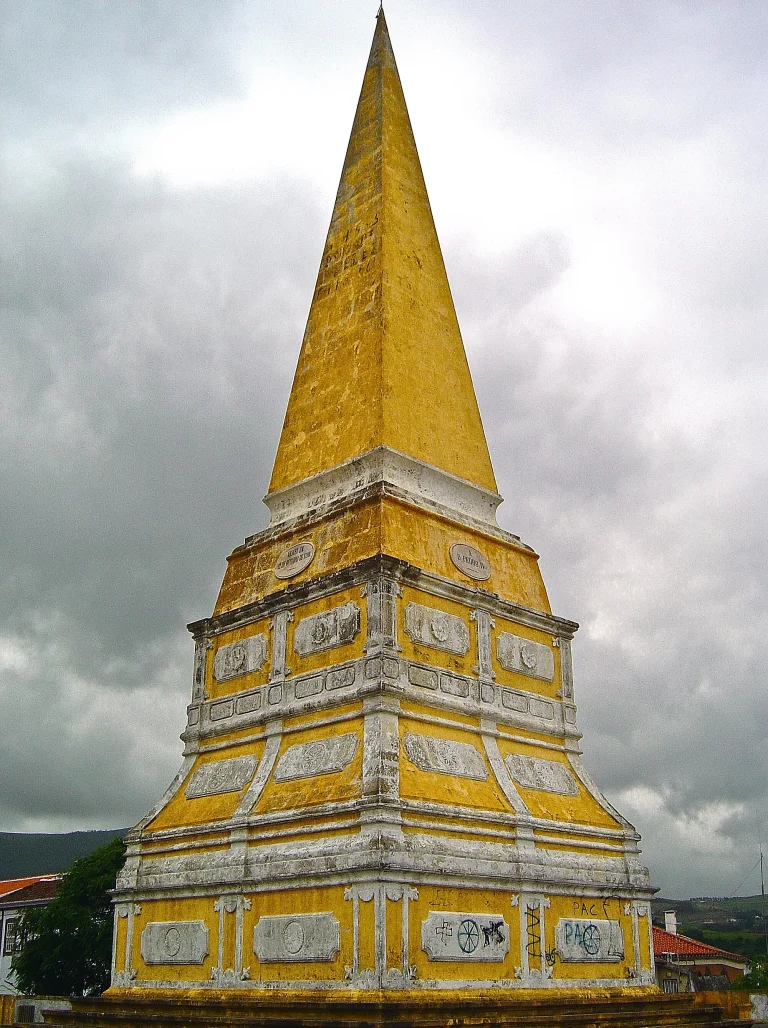
Alto da Memória (Angra do Heroísmo)
Acima do centro histórico de Angra, o Alto da Memória é um obelisco erguido em 1856 com as pedras do…
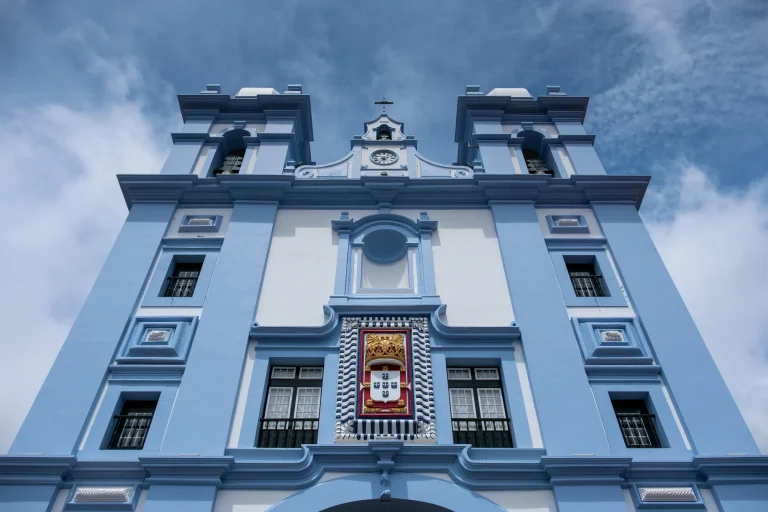
Igreja da Misericórdia (Angra do Heroísmo)
Na rua principal de Angra, a igreja da Misericórdia destaca-se pela torre sineira octogonal e pela fachada azul e branca;…
Experiências
Descubra experiências relacionadas

Rota de 1 dia no São Jorge
Todas as idades • 10 Horas • Deslumbre-se com a paisagem natural de São Jorge

Fajãs – circuito de veleiro
7,5 Horas • Desfrute da magnífica costa sul da Madeira a bordo do clássico veleiro!
 English (UK)
 Português
 Polski
 Nederlands
 Italiano
 Français
 Español
 Deutsch
 한국어
 简体中文
 Svenska
 Português do Brasil
 Dansk
 Norsk
