Zambujeira do Mar
The fishing village on the tall Alentejo cliffs, with stairs to the beach, the Fishermen’s Trail and storks nesting over the surf.

Zambujeira do Mar is what a fishing village looks like after everyone else discovered it and decided, mostly, to leave it alone: white houses on the edge of tall, carved cliffs, long beaches of pale sand reached by wooden stairs, storks nesting on sea rocks, and the salt wind doing what it has always done.
The village on the Vicentine cliffs
It sits in the coastal parish of Odemira, inside the South-West Alentejo and Vicentine Coast natural park, one of the best-preserved stretches of European coastline. At the heart of the village, the chapel of Nossa Senhora do Mar overlooks the beach from the cliff top; below, the Rota Vicentina’s Fishermen’s Trail passes through on its way between Vila Nova de Milfontes and the borders of the Algarve. The little fishing harbour of Entrada da Barca still works north of the village, and further along the cliffs the white storks — the only ones in the world to nest on ocean cliffs — stand over the surf of the Cabo Sardão. Every August the fields above the village host the Sudoeste music festival; the rest of the year belongs to walkers, surfers and the fishers. Southwards, the coast runs on to the Ilha do Pessegueiro and Porto Covo.
What to see
- The beach below the village, reached by stairs
- The chapel of Nossa Senhora do Mar
- The Alteirinhos and Tonel beaches nearby
- Cape Sardão and its cliff-nesting storks
- The Fishermen’s Trail along the cliffs
Practical information
Zambujeira do Mar lies on the Alentejo coast, about 2 hours 15 from Lisbon and one hour from Lagos. Summertime brings surfers and festival crowds; April to June and September are the perfect quiet season, with light for the cliffs and plenty of space on the sand.
Image credit: Zambujeira do Mar by Tulumnes — CC BY-SA 4.0, via Wikimedia Commons.
To Visit
More to explore
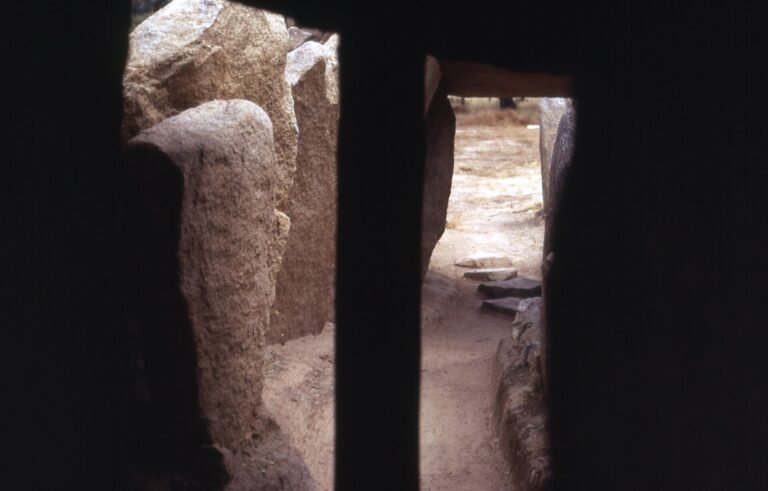
Anta Grande do Zambujeiro
The largest dolmen in Iberia: seven six-metre pillars, a menhir with cup marks and five millennia of silence near Évora.
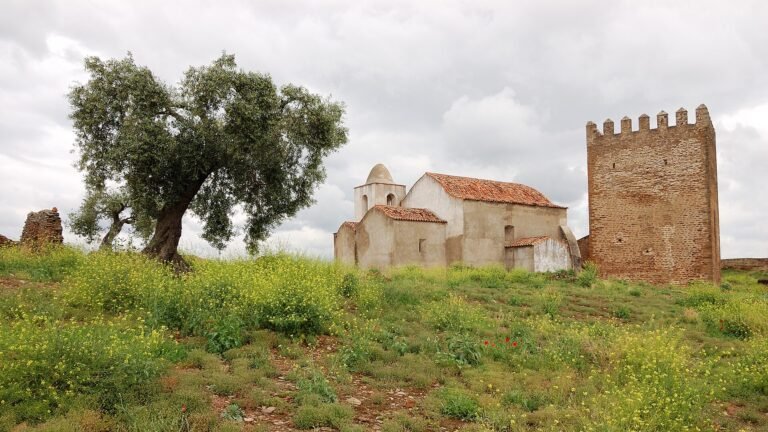
Castelo de Noudar
A castle with no town, founded in 1308 on the Spanish border — now a nature park among olive groves…

Alter do Chão
A castle rebuilt by King Pedro I and the world’s oldest stud farm, breeding the grey Alter Real horses since…
Experiences
Explore related experiences

 English (UK)
 Português
 Polski
 Nederlands
 Italiano
 Français
 Español
 Deutsch